Finance
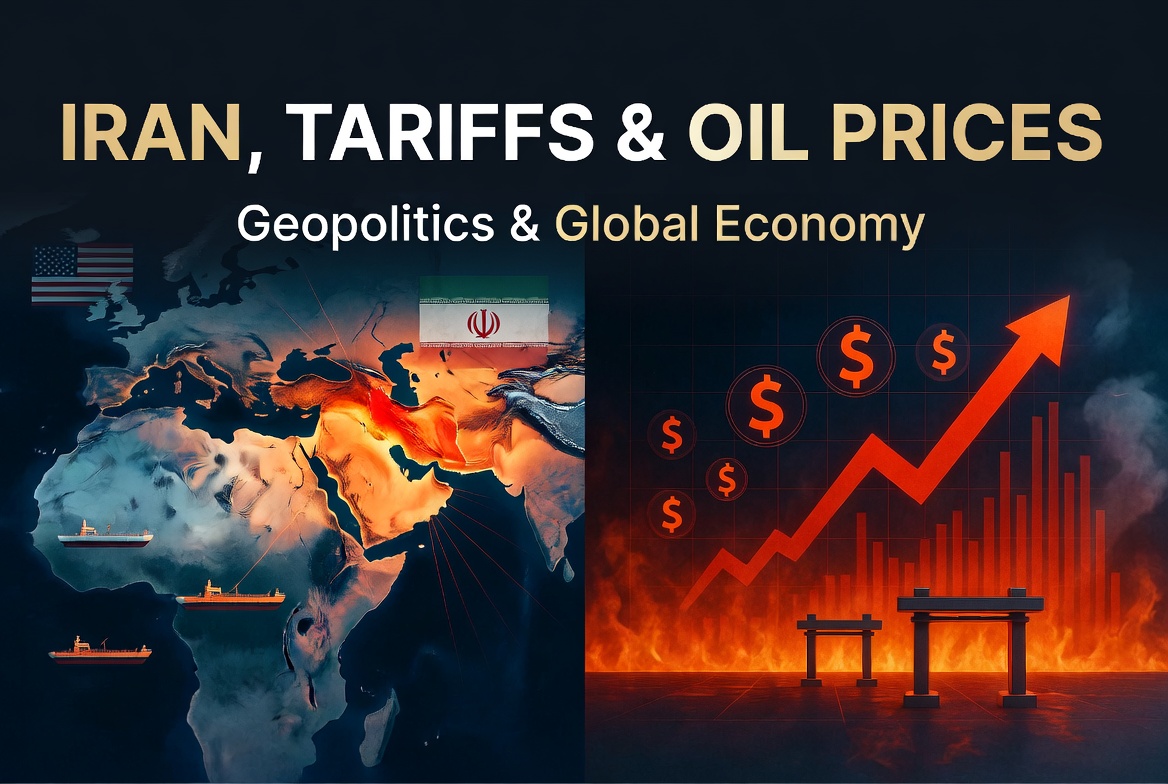
Iran, Tariffs & Oil Prices: Geopolitics vs. Economy
Explore how Iran sanctions, U.S. tariffs, and volatile oil prices are reshaping the global economy in 2025. A deep-dive into geopolitics, energy markets, and what it means for your finances.
By BaseNeed Team · April 21, 2026 · 20 min read read
Geopolitics Iran Sanctions Oil Prices Tariffs Global Economy
By the Baseneed Editorial Team | Finance & Geopolitics Desk | Last Updated: April 21, 2026 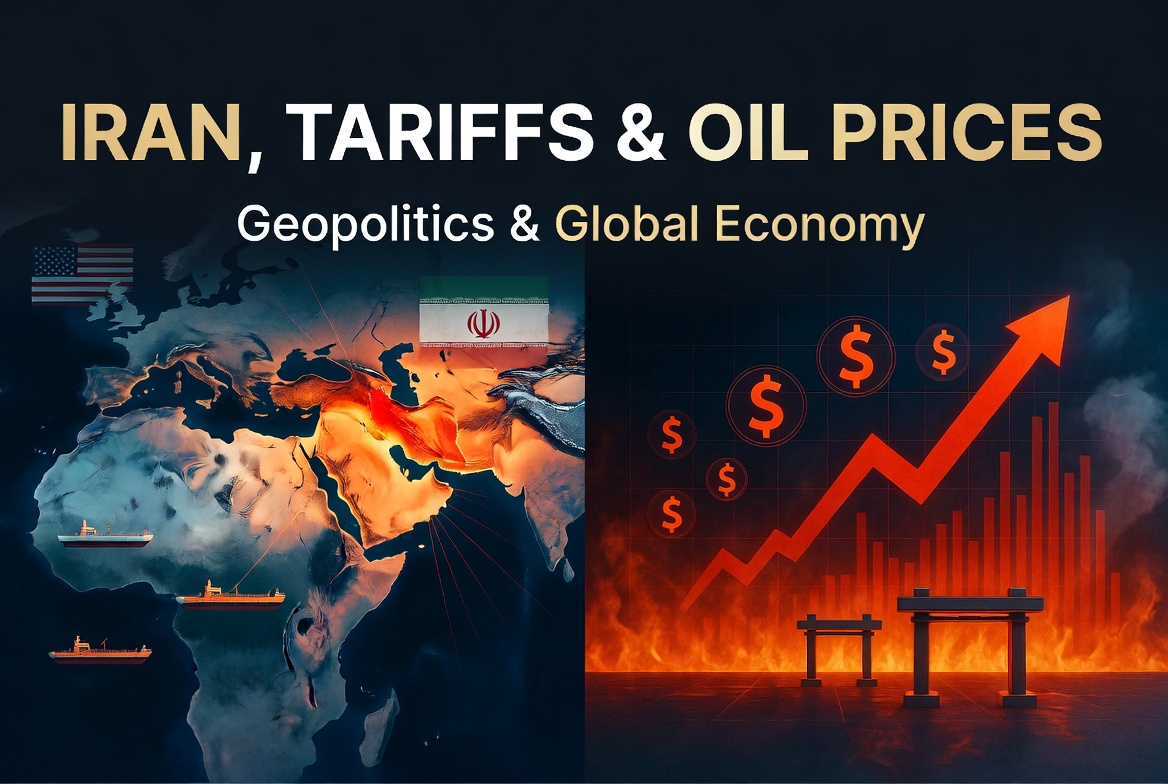 ---
---
The world economy in 2026 is navigating one of its most turbulent periods in modern history. A perfect storm of geopolitical tensions, aggressive trade tariffs, and wildly fluctuating oil prices has created enormous uncertainty for governments, businesses, investors, and everyday consumers alike. At the center of this storm sits Iran — a country whose strategic position in the Middle East, vast energy reserves, and ongoing conflict with Western nations continues to send shockwaves through global markets.
In this in-depth analysis, we break down exactly how Iran's geopolitical situation, U.S.-led tariff policies, and global oil price dynamics are interconnected — and what it all means for the economy you live in every day. Whether you are a military family managing a tight budget, a small business owner navigating rising costs, or an investor trying to protect your portfolio, this guide gives you the clarity you need.
Key Takeaways
- Iran's oil sanctions and nuclear tensions are a primary driver of global energy price volatility in 2025, with any escalation capable of spiking Brent crude by $10-$20 per barrel overnight.
- U.S. tariffs on China, Europe, and emerging markets are slowing global trade, raising consumer prices, and creating inflationary pressure that forces central banks to keep interest rates higher for longer.
- Oil prices in 2025 have ranged from the mid-$60s to the low-$90s per barrel, reflecting the extreme uncertainty created by overlapping geopolitical and economic forces.
- Military families face direct financial impact through fuel surcharges, PCS move costs, BAH erosion, and higher prices on imported goods at commissaries and exchanges.
- Investors should focus on diversification across energy, defense, commodities, and safe-haven assets to protect portfolios against geopolitical volatility.
- Staying informed and adjusting financial plans proactively is the single most effective tool individuals have against macroeconomic uncertainty.
The Iran Factor: Sanctions, Strategy, and Regional Power
Iran remains one of the most consequential geopolitical actors in the world. As one of OPEC's founding members and the holder of the world's second-largest natural gas reserves and fourth-largest proven oil reserves, Iran's economic and political decisions ripple across global energy markets with profound effects.
Since the collapse of the Joint Comprehensive Plan of Action (JCPOA) and the subsequent reimposition of U.S. sanctions under the "maximum pressure" campaign, Iran has found itself increasingly isolated from the international financial system. Sanctions have severely limited Iran's ability to export oil — its primary source of government revenue — contributing to currency collapse, rampant inflation exceeding 40% annually, and widespread economic hardship for ordinary Iranians.
Yet Iran has proven remarkably resilient. Through a combination of shadow shipping networks, discounted oil deals with China and other non-aligned nations, and the growth of a domestic "resistance economy," Tehran has found ways to keep oil revenues flowing, albeit at reduced levels. In 2024 and into 2025, Iran's oil exports have recovered significantly compared to their lowest point during peak sanctions enforcement, reportedly reaching 1.5 to 1.8 million barrels per day in some estimates.
This creates a persistent paradox for global oil markets: Iran is simultaneously under heavy international pressure and still a meaningful supplier of crude to key Asian markets. Any shift in sanctions enforcement — whether a new diplomatic deal or an escalation of military tensions — can rapidly move oil prices by several dollars per barrel within hours of news breaking.
The threat of military escalation involving Iran's nuclear program remains a constant background risk. Any direct conflict involving Iran or its proxies could disrupt oil flows through the Strait of Hormuz, a critical maritime chokepoint through which approximately 20% of the world's traded oil passes every single day. Such an event would cause an immediate and severe spike in global energy prices, triggering inflation surges and potential recession in oil-importing countries across Europe, Asia, and the Americas.
Iran's influence also extends far beyond direct oil exports. Through its network of regional proxies — including Hezbollah in Lebanon, Houthi forces in Yemen, and various militia groups in Iraq and Syria — Iran can destabilize energy infrastructure and shipping lanes across the Middle East without direct military confrontation. Each of these flashpoints creates a persistent geopolitical risk premium embedded in oil prices that would otherwise be lower given current demand conditions.
U.S. Tariffs: Trade Wars and Their Global Consequences
Alongside the Iran situation, the aggressive use of tariffs by the United States has become a defining feature of global economic policy in 2025. The re-escalation of trade tensions, particularly between the U.S. and China but also touching Europe, Canada, Mexico, and a range of emerging markets, has introduced a new layer of unpredictability into supply chains, investment decisions, and consumer prices worldwide.
Tariffs are essentially taxes on imported goods, paid by domestic importers and typically passed directly on to consumers in the form of higher prices. When the world's largest economy imposes sweeping tariffs — as has been the case with steel, aluminum, semiconductors, electric vehicles, solar panels, pharmaceuticals, and a broad range of consumer goods — the effects cascade far beyond U.S. borders and into every household that buys these products.
For military families and working Americans, the most direct impact of tariffs is felt at the checkout counter. Imported electronics, vehicles, clothing, tools, and household goods all become more expensive as tariffs work their way through multi-layered supply chains. But the macroeconomic effects are equally significant and harder to see: tariffs slow global trade volumes, reduce economic efficiency through misallocated production, increase costs for domestic manufacturers who rely on imported components, and can push already-fragile economies into recession.
Tariffs and the Oil Price Connection
The relationship between tariffs and oil prices is more direct than many people realize. When tariffs dampen economic growth — particularly in major manufacturing economies like China, Germany, and South Korea — global industrial demand for oil falls. Fewer factories running, fewer ships moving goods across oceans, and fewer trucks delivering products all mean less fuel burned. This lower demand puts downward pressure on oil prices, which in turn benefits oil-importing nations but devastates oil exporters dependent on high prices to balance their national budgets.
Conversely, tariffs can simultaneously cause domestic inflationary pressures that force central banks to keep interest rates elevated. Higher interest rates strengthen the U.S. dollar, and since oil is priced globally in U.S. dollars, a stronger dollar makes oil effectively more expensive for non-dollar economies, reducing their purchasing power and complicating central bank decisions across dozens of countries.
This creates a paradoxical situation where tariffs both suppress oil demand (through slower growth) and raise effective oil costs for foreign buyers (through a stronger dollar) — two forces pulling in opposite directions that together generate significant market uncertainty and volatility.
Oil Prices in 2025: Volatility as the New Normal
Global oil prices have been on a rollercoaster throughout 2025. After a period of relative post-pandemic stability, prices have swung dramatically in response to a series of overlapping shocks: OPEC+ production decisions, unexpected demand shifts from China's uneven economic recovery, geopolitical flashpoints in the Middle East, Red Sea shipping disruptions, and the ongoing uncertainty created by sweeping trade tariffs.
Brent crude — the global benchmark — has oscillated between the mid-$60s and the low-$90s per barrel, a range that reflects just how many competing forces are acting on the market simultaneously. For energy-dependent businesses, farmers, airlines, shipping companies, and logistics operators, this volatility makes financial planning extraordinarily difficult and forces constant recalculation of operating budgets.
OPEC+ Internal Tensions
OPEC+ — the alliance between OPEC members and key allies including Russia — has been trying to manage this volatility through coordinated production cuts. But internal disagreements have seriously undermined these efforts. Russia, under severe Western sanctions of its own following the war in Ukraine, has financial incentives to pump as much oil as possible at current prices to fund its military operations. Saudi Arabia, meanwhile, needs prices in the $80-$90 range to fund its ambitious Vision 2030 economic transformation program. These fundamentally divergent interests create friction that limits the cartel's effectiveness as a price stabilization mechanism.
The U.S. Shale Wildcard
The U.S. shale industry adds another critical layer of complexity. American oil production has reached record levels in 2025, with U.S. producers accounting for more than 13 million barrels per day — a volume that would have been unimaginable two decades ago. This has shifted the global supply-demand balance significantly and reduced OPEC+'s pricing power compared to previous decades.
However, U.S. shale production is uniquely price-sensitive: when oil falls below approximately $50-$55 per barrel, many shale operators become unprofitable and reduce drilling activity, eventually tightening supply and pushing prices back up. This creates a natural floor under oil prices but also limits how high OPEC+ can push them before American producers ramp up output to capture market share.
How These Forces Directly Affect Military Families
For members of the military community, these macroeconomic forces have very real, very personal financial consequences. Military families are among the most mobile populations in the country, regularly relocating across states, territories, and overseas postings as part of Permanent Change of Station (PCS) moves. The cost of every move — from fuel surcharges on moving trucks to temporary lodging expenses — is directly tied to energy prices.
When oil prices spike, the full cost of living on or near military bases also increases. Commissary and AAFES Exchange prices rise as transportation and distribution costs climb. The real purchasing power of Basic Allowance for Housing (BAH) and Basic Allowance for Subsistence (BAS) gets quietly eroded when broader inflation — driven in significant part by energy costs — outpaces the annual military pay raise.
Tariffs compound these financial pressures considerably. Military spouses who operate small businesses — an extremely common source of secondary household income in the military community — often rely on imported raw materials, merchandise, or components. When tariffs push those input costs higher by 10-25%, business margins suffer and many are forced to either raise prices or absorb losses. Service members planning major household purchases — a new vehicle, home appliances, electronics — find that tariff-driven price increases stretch their financial resources at exactly the moment when they can least afford it.
The geopolitical dimension matters too. Deployed service members serving in or near the Middle East operate in environments directly shaped by the Iran-U.S. tension dynamic. Force posture decisions, deployment lengths, and operational tempo are all influenced by regional geopolitical conditions — which means these economic and diplomatic developments are not just abstract financial news for the military community. They shape the lived reality of service and family life.
What Investors and Financial Planners Are Watching
For those with investment portfolios — including service members using the Thrift Savings Plan (TSP), military retirement accounts, or private brokerage accounts — the Iran situation, tariff landscape, and oil price dynamics are all closely tracked indicators that drive significant market moves.
Energy sector stocks are directly and strongly correlated with oil prices. When Brent crude rises, companies like ExxonMobil, Chevron, Shell, and international majors see their earnings, cash flows, and stock prices increase substantially. Defense contractors — including Lockheed Martin, Raytheon Technologies, Northrop Grumman, and General Dynamics — also tend to benefit when geopolitical tensions rise, as governments increase defense budgets in response to perceived threats. These are areas many TSP investors gain exposure to through the C Fund and I Fund allocations.
Broader market uncertainty, however, often causes investors to shift capital toward safe-haven assets including gold, U.S. Treasury bonds, Japanese yen, and the Swiss franc. This "risk-off" rotation can temporarily but sharply depress equity markets, creating significant short-term volatility in retirement and investment portfolios — which is exactly why understanding these drivers matters to individual investors.
For long-term investors, the key strategic takeaway is that diversification across multiple asset classes — equities, bonds, commodities, real assets, and international holdings — provides the most resilient protection against the unpredictable swings generated by geopolitical shocks and sudden shifts in trade policy. Concentrating too heavily in any one sector or geography dramatically increases vulnerability to these macroeconomic forces.
Forward Scenarios: What Could Happen in Late 2025 and Beyond
As 2025 progresses, several distinct scenarios could fundamentally reshape the economic landscape in either a positive or negative direction.
A diplomatic breakthrough on Iran's nuclear program — even a partial or confidence-building interim deal — could unlock significant increases in sanctioned Iranian oil exports, putting meaningful downward pressure on global prices and potentially providing relief from energy-driven inflation. This would benefit oil-importing nations and consumers globally, though it would present headwinds for oil-exporting countries and energy-sector investors banking on sustained high prices.
Conversely, a military escalation — whether through direct action against Iran's nuclear facilities, a broader regional war involving Iranian proxies, or a closure even temporary of the Strait of Hormuz — would likely cause an immediate and severe spike in oil prices, potentially to $100+ per barrel, accelerating inflation globally and creating real risk of financial market crisis.
On the tariff front, the trajectory of U.S.-China trade relations remains the single most impactful variable for the global economy. Any credible movement toward de-escalation, tariff reductions, or renewed trade negotiations would significantly boost global growth expectations, ease supply chain bottlenecks, and reduce inflationary pressures. A further escalation — particularly if it spreads to additional trading partners — would compound existing headwinds and meaningfully raise the probability of recession in Europe, South Korea, Japan, and potentially the United States itself.
For energy markets specifically, the internal cohesion of the OPEC+ alliance is the key variable to watch. A breakdown in coordination — particularly if the Saudi Arabia-Russia relationship fractures under divergent financial pressures — would likely produce a supply glut, driving prices sharply lower in a way that would benefit consumers but devastate the fiscal stability of oil-dependent states.
Frequently Asked Questions (FAQ)
Why do Iran sanctions affect global oil prices? Iran holds the world's fourth-largest proven oil reserves and is a founding OPEC member. When U.S. sanctions restrict Iranian oil exports, global supply tightens. Even though Iran has found workarounds through China and shadow shipping networks, the constant threat of stricter enforcement creates a geopolitical risk premium baked into global oil prices. Any news about new sanctions, military tensions, or diplomatic progress can move crude oil prices by several dollars per barrel within minutes.
How do U.S. tariffs contribute to inflation? Tariffs function as import taxes paid by domestic businesses that buy foreign goods. These businesses almost always pass the extra costs on to consumers through higher prices. In 2025, tariffs on thousands of product categories — from consumer electronics and cars to steel and pharmaceutical components — have contributed directly to elevated consumer price inflation. They also raise costs for American manufacturers who use imported parts, which increases the final price of domestically produced goods as well.
Will oil prices go up or down in 2025? Oil price direction in 2025 depends on several competing factors. Prices could rise sharply if Iran-related tensions escalate or if OPEC+ enforces tighter production cuts. Prices could fall if a diplomatic deal with Iran adds significant new supply to global markets, if the U.S.-China trade war deepens and crushes industrial demand, or if the OPEC+ alliance fractures. Most energy analysts expect continued high volatility with a central price range of $65-$90 for Brent crude, but acknowledge that unexpected geopolitical events could push prices well outside that range in either direction.
How do high oil prices affect military families specifically? Military families experience high oil prices through multiple channels simultaneously. PCS moving costs rise due to fuel surcharges. Commissary and AAFES Exchange prices increase as distribution and logistics costs climb. Energy bills at on-base and off-base housing spike. The real value of BAH and BAS is quietly eroded by energy-driven inflation. Service members who commute off-base face significantly higher fuel costs. All of these effects hit at the same time, creating cumulative financial pressure that disproportionately impacts families already managing tight military budgets.
What is OPEC+ and why does it matter? OPEC+ is the alliance between the 13 original OPEC member nations (including Saudi Arabia, UAE, Iraq, and others) plus 10 additional major oil exporters led by Russia. Together, OPEC+ controls approximately 40% of global oil production and 80% of the world's proven oil reserves. By collectively agreeing on production levels, OPEC+ can significantly influence global oil prices. When the group agrees to cut production, prices tend to rise. When members cheat on quotas or the alliance fractures, prices can fall sharply. Understanding OPEC+ dynamics is essential for forecasting energy costs.
Should I adjust my TSP or investment portfolio given current geopolitical risks? This is not financial advice, and individual circumstances vary significantly. However, general financial planning principles suggest that geopolitical uncertainty is a good time to review your portfolio's diversification. Overexposure to a single sector, geography, or asset class increases risk. Energy and defense sectors often perform well during geopolitical tension, while consumer discretionary and manufacturing sectors may underperform when tariffs slow growth. Speaking with a certified financial planner — ideally one familiar with military benefits — is strongly recommended before making any changes to your investment allocations.
What is the Strait of Hormuz and why is it so important? The Strait of Hormuz is a narrow waterway between Iran and Oman connecting the Persian Gulf to the Arabian Sea and the broader global ocean shipping network. Approximately 20-21 million barrels of oil pass through it every single day, representing roughly 20% of total global oil trade. It is the world's most strategically critical maritime chokepoint. If Iran were to close or significantly disrupt traffic through the Strait — even temporarily — the immediate impact on global oil supply and prices would be enormous and felt within days in fuel prices around the world.
What to Do Next: Practical Steps for Military Families and Investors
Understanding these geopolitical and economic forces is only valuable if it leads to action. Here are concrete, practical steps you can take right now to protect your finances and stay ahead of these macroeconomic trends.
Review and stress-test your household budget. With energy prices volatile and tariff-driven inflation persistent, now is an excellent time to revisit your monthly budget and identify where you have flexibility. Look specifically at fuel costs, grocery spending, and any upcoming large purchases that may be affected by tariff-driven price increases.
Time major purchases strategically. If you are planning to buy a new vehicle, appliances, or electronics, be aware that tariffs have inflated prices on many imported goods. Consider whether waiting for potential tariff relief — if trade negotiations progress — could save you meaningful money, or whether locking in current prices makes more sense given your personal timeline.
Diversify your TSP or retirement portfolio. If your Thrift Savings Plan or other retirement accounts are heavily concentrated in a single fund or asset class, geopolitical volatility is a compelling reason to review your allocation. The Lifecycle (L) Funds automatically diversify across all TSP fund types and can be an appropriate starting point.
Build or maintain an emergency fund. In environments of high economic uncertainty, having three to six months of essential expenses in liquid savings provides crucial financial security. This is especially important for military families given the unpredictability of deployment schedules, PCS moves, and military pay policy changes.
Stay informed through reliable sources. Bookmark high-quality, nonpartisan economic news sources and check them regularly. Understanding what is driving oil price moves or new tariff announcements helps you make faster, better financial decisions rather than reacting to prices after they have already moved.
Connect with a military financial counselor. All branches of the military offer free access to certified personal financial counselors through programs like the Personal Financial Readiness Program. These professionals are trained to help military families navigate exactly the kind of economic challenges created by geopolitical uncertainty, inflation, and market volatility.
Engage with your military community. Platforms like Baseneed are built specifically to help military families share knowledge, experiences, and resources. If you have found strategies that help your family manage economic pressures, share them. And look to others in the community who may have navigated similar challenges at different duty stations.
Conclusion: Knowledge Is the Best Financial Defense
The intersection of Iran's geopolitical situation, U.S. tariff policies, and global oil price dynamics represents one of the most complex and consequential economic stories of our time. These forces do not operate in isolation — they feed into and amplify each other in ways that can be difficult to predict but are absolutely essential to understand.
For military families, investors, small business owners, and anyone trying to navigate the economic landscape of 2025, staying informed about these geopolitical and economic drivers is not optional — it is essential financial self-defense. Knowledge is the most powerful tool you have when it comes to building and protecting financial resilience against forces that feel far beyond your control.
At Baseneed, we are committed to providing the military community with clear, practical, and actionable information about the forces shaping their financial lives. Bookmark this page, share it with fellow service members and military spouses, and check back as the situation evolves. The world is changing fast — and staying one step ahead starts with staying informed.
---
Geopolitical Risk vs. Oil Price Impact: Comparison Table
| Scenario | Probability | Oil Price Impact | Duration | Who Benefits | Who Suffers |
|---|---|---|---|---|---|
| Iran nuclear deal reached | Medium | -$10 to -$20/barrel | Sustained | Oil importers, consumers | Oil exporters, energy stocks |
| Iran military escalation | Low-Medium | +$15 to +$30/barrel | Short to medium | Oil exporters, defense stocks | Oil importers, airlines, logistics |
| U.S.-China tariff de-escalation | Medium | Neutral to +$5/barrel | Sustained | Global trade, manufacturers | USD strength, safe-haven assets |
| U.S.-China tariff escalation | Medium-High | -$5 to -$10/barrel | Sustained | USD, U.S. domestic goods | Exporters, emerging markets |
| OPEC+ production cut | Medium-High | +$5 to +$15/barrel | Months | Oil producers, energy stocks | Consumers, inflation pressure |
| OPEC+ alliance breakdown | Low-Medium | -$15 to -$25/barrel | Sustained | Consumers, manufacturers | Oil states, energy investors |
| U.S. shale output surge | High | -$5 to -$10/barrel | Sustained | Oil importers, consumers | OPEC+ leverage, oil stocks |
| Strait of Hormuz disruption | Very Low | +$20 to +$50/barrel | Days to weeks | Oil speculators | Global economy, airlines |
Sources
- U.S. Energy Information Administration (EIA) — Global Oil Supply and Demand Reports 2024-2025
- International Energy Agency (IEA) — World Energy Outlook 2024
- U.S. Department of the Treasury — Iran Sanctions Program Documentation
- Congressional Research Service — U.S. Tariff Policy and Trade Agreements, 2025
- World Bank — Commodity Markets Outlook, April 2025
- International Monetary Fund (IMF) — World Economic Outlook, April 2025
- Federal Reserve — Monetary Policy Reports and FOMC Minutes 2024-2025
- U.S. Department of Defense — Defense Manpower Data Center, Military Compensation References
- OPEC — Monthly Oil Market Report, March 2025
---
Written by the Baseneed Editorial Team — providing trusted financial and geopolitical analysis for the U.S. military community since our founding. This article is for informational purposes only and does not constitute financial, legal, or investment advice. Please consult a qualified financial professional before making any financial decisions.
Read Full Article on BaseNeed →
Related Finance guides
- → Breaking VA news: Veterans can now combine Montgomery and Post — 24 min read read
- → Best Smart TVs 2026: Top Picks for Military Families & Veterans — 4 min read read
- → BaseneedCom Review: Military Housing & Community Platform — 5 min read read
- → Best Military Moving Companies & PCS Tips [2024 Guide] — 4 min read read