Military Life
Trump Threatens US Troop Withdrawal from Germany 2026: Impact on Ramstein Soldiers & Military Families
President Trump announced a possible reduction of US troops in Germany in 2026. What does this mean for American families at Ramstein Air Base, housing, PCS moves, and life in the Kaiserslautern Military Community? Full analysis, risks, and practical advice for military families.
By BaseNeed TeamSteven SMith · May 1, 2026 · 7 min read read
US Troops Germany Ramstein Air Base Military PCS OCONUS Assignments Military Family Relocation
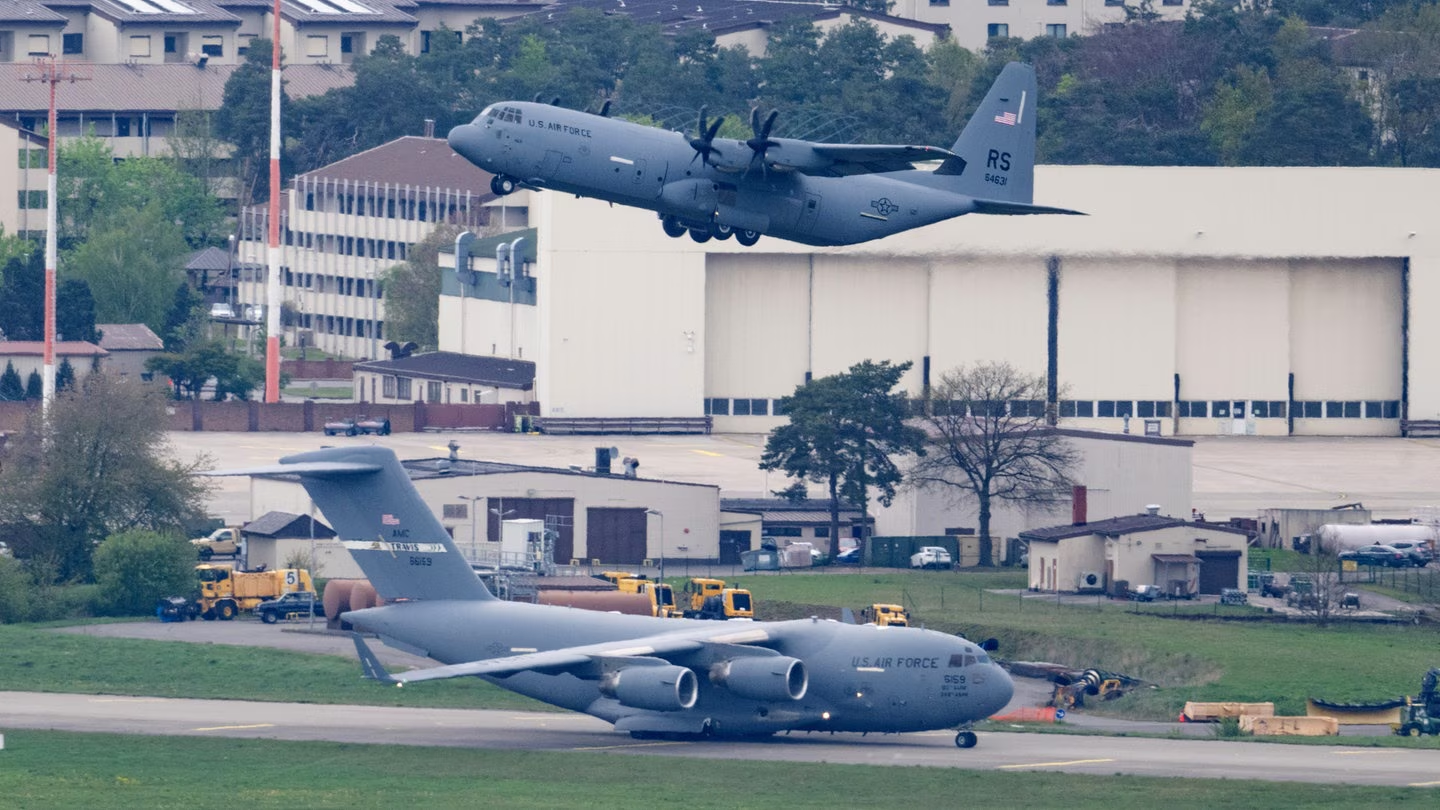
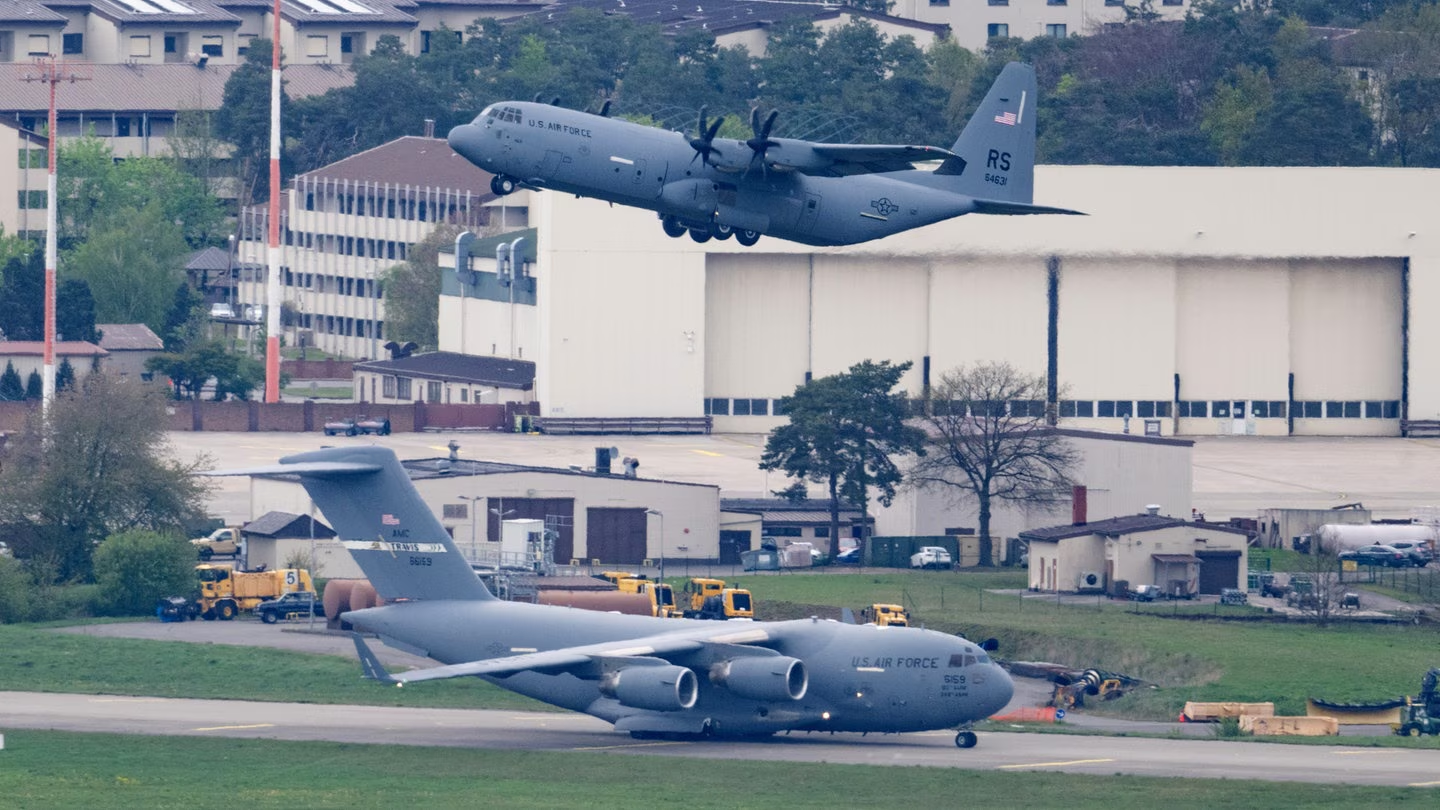
Trump Threatens US Troop Withdrawal from Germany 2026: What It Means for Soldiers and Families at Ramstein
On April 30, 2026, President Donald Trump announced via Truth Social that the United States is “studying and reviewing the possible reduction of Troops in Germany,” with a decision expected in the coming days. This statement, made amid rising tensions with NATO allies following a public spat with German Chancellor Friedrich Merz over the U.S.-led operations in the Iran conflict, has sent ripples of uncertainty through the American military community in Europe.
For the approximately 36,000–38,000 active-duty U.S. service members stationed in Germany — along with their families — this news raises serious questions about housing stability, upcoming PCS moves, schooling, medical care, spousal employment, and the future of American life in the Kaiserslautern Military Community (KMC) and at Ramstein Air Base.
Trump’s Statement on Reducing Troops in Germany – What Did He Actually Say?
In his Truth Social post late on April 29, 2026, President Trump wrote: “The United States is studying and reviewing the possible reduction of Troops in Germany, with a determination to be made over the next short period of time.” He also hinted that similar reviews could apply to U.S. troops in Italy and Spain, responding “probably” when asked about potential pullouts from those countries.
The announcement came just days after German Chancellor Friedrich Merz criticized aspects of U.S. policy in the Iran conflict, which Trump interpreted as unsupportive. This fits into Trump’s long-standing criticism of NATO burden-sharing and his “America First” foreign policy approach.
Historical Context: Trump’s Previous Attempts to Reduce Troops in Europe
During his first term in 2020, Trump ordered the withdrawal of nearly 12,000 U.S. troops from Germany. While some adjustments were made, the full plan faced significant opposition from Congress, the Pentagon, and European allies, and was never completely implemented.
In 2025 and 2026, Trump has repeatedly voiced frustration that European NATO members are not contributing enough to collective defense, especially amid the ongoing Iran conflict and disputes over securing key maritime routes like the Strait of Hormuz. The latest statement appears to be both a policy review and negotiating leverage.
Current U.S. Military Presence in Germany – The Strategic Importance of Ramstein
Germany remains the cornerstone of U.S. military operations in Europe. As of early 2026, there are roughly 36,400–38,000 active-duty American personnel stationed across the country. When including family members and DoD civilians, the total U.S. community exceeds 50,000 people.
Ramstein Air Base is the most critical installation. It serves as the headquarters of U.S. Air Forces in Europe and Africa (USAFE-AFAFRICA), functioning as a major airlift hub, command center, and logistical gateway for operations in the Middle East, Africa, and beyond. Military experts frequently describe Ramstein as “irreplaceable” in the short to medium term because replicating its capabilities elsewhere would be extremely costly and time-consuming.
Other vital sites include Landstuhl Regional Medical Center — the largest U.S. military hospital outside the United States — and various Army garrisons in the Kaiserslautern Military Community, Stuttgart, and Grafenwöhr.
Why Trump Is Pushing for a Troop Reduction Now
Several factors appear to be driving the current review: - Long-term dissatisfaction with NATO allies not meeting the 2% GDP defense spending target. - Perceived lack of European support for U.S. actions in the Iran conflict. - Recent comments by Chancellor Friedrich Merz that angered the Trump administration. - A desire to redirect U.S. resources toward higher-priority strategic areas or domestic needs.
Trump has consistently argued that the United States should not continue to shoulder a disproportionate share of the defense burden for wealthy European nations.
Major Problems a U.S. Troop Withdrawal Would Create in the Region
A significant reduction would trigger serious challenges across strategic, economic, and personal dimensions.
Strategic and Security Implications
Analysts warn that a large-scale drawdown from Germany would weaken NATO’s overall deterrence, particularly against Russia on the eastern flank. It would also reduce the U.S. ability to project power quickly into the Middle East and Africa. Ramstein’s unique logistical role makes any rapid relocation highly problematic.
Severe Economic Impact on German Host Communities
The Kaiserslautern region (known as “K-Town” to Americans) has been economically intertwined with the U.S. military for decades. American personnel and families inject hundreds of millions of euros annually into the local economy through housing, shopping at the Exchange and Commissary, dining, car purchases, and services.
A sudden troop reduction could lead to increased housing vacancies, revenue losses for local businesses, and pressure on municipal budgets. Past base adjustments have shown how dependent some towns are on the American presence.
Direct Challenges for American Military Families
For service members and families currently in Germany, the uncertainty is deeply personal: - Housing disruptions — sudden PCS orders could complicate leases and on-base assignments. - Schooling interruptions — DoDDS schools serving thousands of children could face enrollment drops and program changes. - Medical care concerns — reliance on Landstuhl Regional Medical Center could be affected during transitions. - Spousal employment — many military spouses work locally and would face job losses. - Emotional and financial stress — frequent moves are already challenging; added policy uncertainty increases anxiety.
If you are house hunting in the area, explore current options in our Military Housing Search in Germany.
How This Could Affect 2026–2027 PCS Moves
Many families are in the middle of planning Permanent Change of Station moves for summer 2026 or 2027. A policy shift could accelerate, delay, or cancel orders, creating planning difficulties around school calendars, spousal jobs, and housing.
Stay prepared with our detailed resource: Essential 2026 PCS Checklist.
Reactions from Experts, the Pentagon, German Officials, and the Military Community
The announcement shocked many in the Pentagon, with officials scrambling to assess its seriousness. Military analysts have called a major withdrawal from Germany “foolish” due to Ramstein’s strategic value. German officials expressed concern about both security and the local economy. Within the military community, opinions are divided — some support reducing overseas commitments, while others worry about operational readiness and family stability. Congressional pushback is expected.
Pros and Cons of Reducing U.S. Troops in Germany
Arguments in Favor: - Encourages NATO allies to increase defense spending. - Reduces costs for U.S. taxpayers. - Allows force reallocation to other priorities. - Serves as negotiating leverage.
Arguments Against: - Weakens NATO cohesion and deterrence. - High logistical and financial costs of relocation. - Negative economic impact on host communities. - Potential harm to morale and retention.
What to Do Next: Practical Advice for Troops and Families
- Monitor official channels (EUCOM, Ramstein PAO, Stars and Stripes).
- Review your housing situation and communicate with landlords early. Use our Housing Marketplace.
- Update documents and build a financial buffer. Check our BAH Calculator for updated rates.
- Connect with the community for support on our Blog and community sections.
Key Takeaways
- President Trump has initiated a review of possible U.S. troop reductions in Germany amid tensions with NATO and Chancellor Merz.
- Germany hosts around 36,000–38,000 U.S. troops, with Ramstein as the key strategic hub.
- A significant drawdown would create strategic, economic, and personal challenges.
- The situation remains fluid as of May 1, 2026.
FAQ – Frequently Asked Questions
Will Trump fully withdraw troops from Germany? Unlikely in the short term due to logistical, financial, and Congressional hurdles. A limited reduction is more realistic.
How many U.S. troops are currently in Germany? Approximately 36,000–38,000 active-duty personnel.
How would this affect housing near Ramstein? Off-base rental demand could decrease, potentially leading to more vacancies.
Should I delay my PCS? Continue preparing but remain flexible and follow official guidance.
Sources & Resources
- Politico: “Trump says US considering reducing troops in Germany” (April 29, 2026)
- Reuters: “Trump says the US is reviewing a potential reduction of its troops in Germany”
- The Guardian: “Trump threatens to reduce troop numbers in Germany”
- Stars and Stripes and official EUCOM statements
For more military resources, visit our Housing, BAH Calculator, and Blog on BaseNeed.
Written by William Ramstein AB, Germany – May 1, 2026
Last updated: May 1, 2026
Read Full Article on BaseNeed →
Related Military Life guides
- → Basic Allowance for Housing (BAH): The Complete 2026 Guide to Rates, Dependents & How It's Calculated — 13 min read read
- → Military Car Buying: The Complete 2026 Guide to Auto Loans, SCRA Protections & Avoiding Dealer Traps — 14 min read read
- → Military Spouse Income During Deployment: Stack Pay, Budget the Extra & Add Flexible Work (2026) — 8 min read read
- → Military Discount Flights: The Complete 2026 Guide to Airline Military Discounts, Free Bags & Cheap Fares — 14 min read read
- → Blended Retirement System: The Complete 2026 Guide to BRS, TSP Matching & Your Military Retirement — 14 min read read
- → Basic Training Graduation Gifts: 45+ Ideas by Branch, Budget & What Recruits Actually Want (2026) — 13 min read read