Military Life
Military Spouse Income During Deployment: Stack Pay, Budget the Extra & Add Flexible Work (2026)
Deployment triggers extra pay. The families who get ahead stack it with a tighter budget and flexible, same-day work. Here is the 2026 playbook to grow real savings.
By BaseNeed Team · August 1, 2026 · 8 min read read
military spouse income deployment pay FSA 2026 Savings Deposit Program flexible work side income deployment budgeting
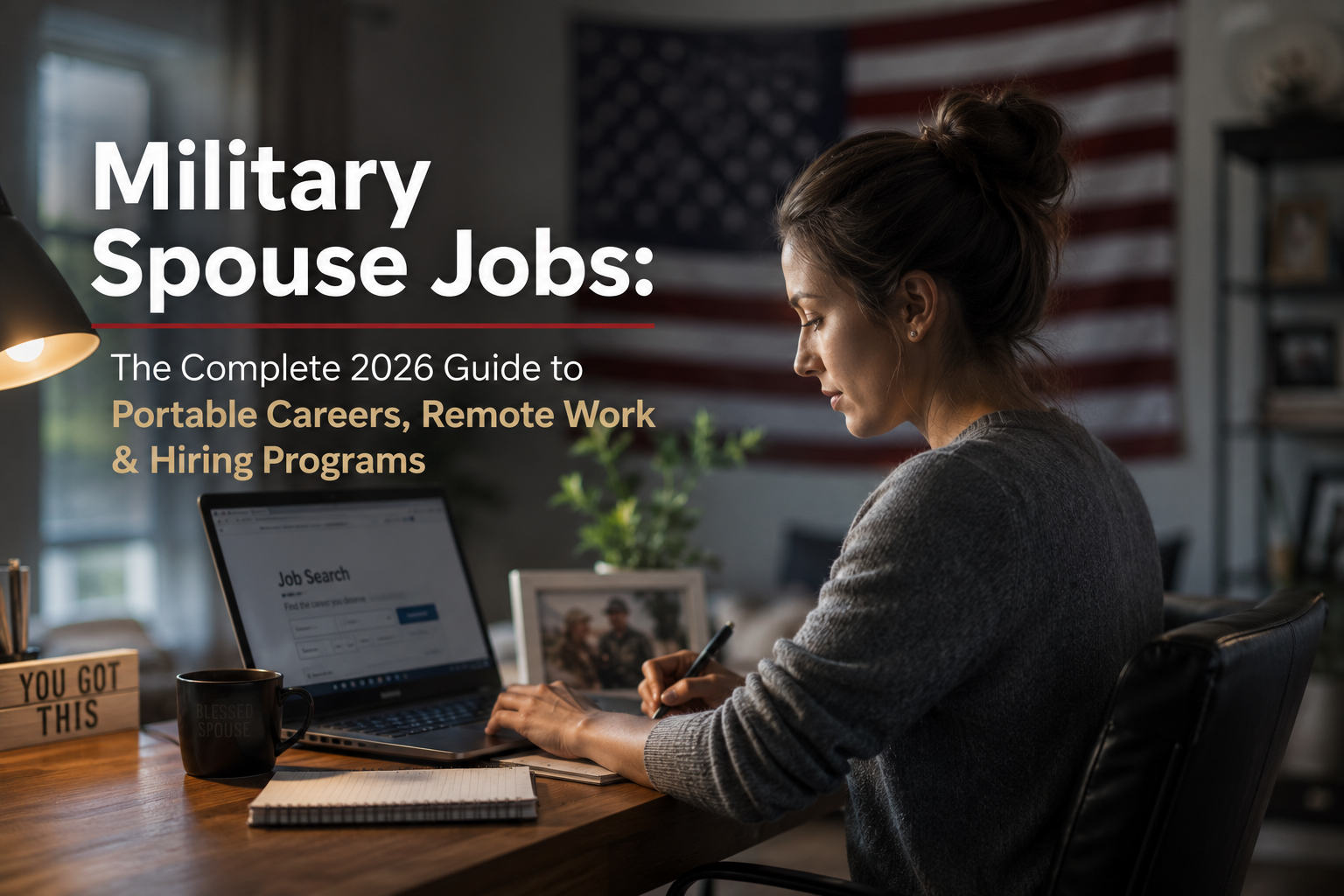
Military Spouse Income During Deployment: Stack Pay, Budget the Extra & Add Flexible Work (2026)
By the BaseNeed Team — military family resources, updated 2026
Growing your military spouse income during deployment is less about one big move and more about stacking three things at once: the extra pay a deployment triggers, a tighter budget while your service member is away, and flexible work you can actually fit around solo-parenting. Do all three and a hard season can quietly become your family's best savings year.
This guide walks through each layer with 2026 numbers, then hands you a simple plan you can set up in an afternoon.
The deployment pay stack: what already lands in your account
Before you earn a dollar more, know what a deployment already adds. Several pays and allowances switch on when your service member deploys, and a few are tax-free.
| Pay or benefit | 2026 amount | Key detail |
|---|---|---|
| Family Separation Allowance (FSA) | $300/month | Kicks in after 30+ days away from dependents; raised from $250 in 2026 |
| Hostile Fire / Imminent Danger Pay | Up to $225/month | Paid for service in a designated danger area; tax-free in a combat zone |
| Savings Deposit Program (SDP) | 10% guaranteed return on up to $10,000 | Available in combat zones; interest runs up to 90 days after returning |
| Combat Zone Tax Exclusion | Varies | Enlisted pay earned in a combat zone is excluded from federal income tax |
The exact figures come straight from the Defense Department's military pay office and Military OneSource. Together they can add several hundred tax-advantaged dollars a month — and the SDP alone can return close to $1,000 over a year if you can fund it.
Here is why the Savings Deposit Program deserves special attention: a guaranteed 10% return dwarfs any civilian savings account, and it exists only while your service member is deployed to a combat zone. Fund it to the $10,000 cap and you earn roughly $1,000 in a year, including interest that keeps compounding for up to 90 days after they come home. For many families, maxing the SDP is the single highest-return financial move of the entire deployment — before you earn an extra dollar anywhere else.
Why military spouse income during deployment still falls short
Here is the catch: those pays are fixed, and deployment expenses are not. Solo-parenting often means more childcare, more takeout on hard days, extra travel, and the repairs that always seem to break the week after your spouse leaves.
The bigger drag is the career gap. The U.S. Department of Labor reports military spouse unemployment near 21% — about five times the civilian rate — with more than half of working spouses underemployed. A deployment makes a rigid 9-to-5 even harder to hold. That is why building military spouse income during deployment usually means choosing work that bends to your schedule instead of the other way around.
Three ways to add military spouse income during deployment
1. Portable and remote roles. The DoD's SpouseWorks program (formerly SECO) offers free career coaching, and My Career Advancement Account (MyCAA) provides up to $4,000 toward licenses, certifications, and associate degrees in portable fields. The Military Spouse Employment Partnership connects spouses with more than 700 employers that hire for remote-friendly roles. Because a remote or portable role survives a move, the certification you earn now keeps paying at your next duty station — and often right through the deployment if the work is online.
2. Flexible, same-day gig work. When you need money now and can only commit a day at a time, one-day jobs are the fastest path. Our partner FindYourOneDayJob is a marketplace built entirely around single-day work — moving help, cleaning, assembly, event staff, senior errands, and about 90 more categories. You sign up free, set a radius around your base, and get paid the same day, keeping 85% of every job. Their companion guide on deployment side jobs for military spouses breaks down which gigs pay best and how to schedule them around a deployment.
3. Sell what a PCS leaves behind. Deployments and moves generate stuff you no longer need. List household goods, gear, and furniture on the BaseNeed marketplace or offload assembly and hauling for others by posting in your community feed. If you are hiring instead of working, the AI job post generator writes a listing for you in seconds.
How to budget the deployment bump
Extra pay only builds wealth if it does not quietly disappear. Use this checklist the week your deployment allowances start:
- Send FSA and danger pay to a separate savings account, not your everyday checking.
- Fund the Savings Deposit Program first if you deploy to a combat zone — a guaranteed 10% is hard to beat.
- Set one concrete goal for gig earnings: emergency fund, debt payoff, or the homecoming trip.
- Automate transfers on payday so saving is the default, not a decision.
- Track one-day work as self-employment income and set aside ~20% for taxes.
- Revisit your BAH and base costs so the budget matches your current station.
Turn a deployment into your family's best savings year
The families who come out of a deployment ahead treat the extra pay as savings, not spending money. Start by naming one target — a fully funded emergency fund, a paid-off credit card, or a house down payment. Then automate it: route allowances into savings on payday and hold everyday spending to its pre-deployment budget so the extra never gets absorbed.
Adding military spouse income during deployment through flexible work accelerates that goal, but only if the earnings are saved too. A simple rule keeps it sustainable across a long deployment: bank every allowance in full, and split gig earnings 80/20 between savings and a small monthly reward. The reward keeps morale up during the hard stretch; the 80% quietly builds the balance you will be grateful for at homecoming.
A realistic deployment income plan
Picture a nine-month deployment. FSA adds $300 a month and danger pay adds up to $225, much of it tax-free — roughly $4,700 over the deployment. Fund the SDP steadily and you might earn several hundred dollars in guaranteed interest. Add two flexible gigs a week at about $150 each and you are earning near $1,200 a month in same-day pay. Stacked and saved, that is a five-figure swing by homecoming — without signing a single long-term contract. Run that math for your own hours and it becomes clear that building military spouse income during deployment is really a savings strategy in disguise.
For more tools, checklists, and base-by-base guides, browse the BaseNeed resource library and the careers board.
Frequently asked questions
How much extra military spouse income during deployment is realistic?
It depends on your hours, but stacking allowances with two same-day gigs a week commonly adds $900–$1,200 a month, on top of tax-advantaged deployment pay you are already receiving.
Is deployment pay like FSA and combat pay taxable?
Family Separation Allowance is tax-free, and pay earned in a designated combat zone is excluded from federal income tax under the Combat Zone Tax Exclusion. Check the IRS military page for your situation.
What is the Savings Deposit Program and who qualifies?
The SDP pays a guaranteed 10% annual return on up to $10,000 for service members deployed to a designated combat zone. Interest continues up to 90 days after leaving the zone, per Military OneSource.
Can a spouse earn money during deployment without a long-term job?
Yes. Same-day platforms like FindYourOneDayJob let you book single-day work with no résumé and no fixed schedule, so nothing collides with childcare or a sudden change in orders.
Where do I start if I want portable income after this deployment?
Begin with free SpouseWorks coaching and MyCAA funding for a portable certification, and use flexible gig work to cover costs while you retrain.
BaseNeed is a free, community-built platform for the U.S. military community — housing, jobs, PCS help, and pay tools across 172 installations. This guide is part of our partnership with FindYourOneDayJob.
Read Full Article on BaseNeed →
Related Military Life guides
- → Basic Allowance for Housing (BAH): The Complete 2026 Guide to Rates, Dependents & How It's Calculated — 13 min read read
- → Military Car Buying: The Complete 2026 Guide to Auto Loans, SCRA Protections & Avoiding Dealer Traps — 14 min read read
- → Military Discount Flights: The Complete 2026 Guide to Airline Military Discounts, Free Bags & Cheap Fares — 14 min read read
- → Blended Retirement System: The Complete 2026 Guide to BRS, TSP Matching & Your Military Retirement — 14 min read read
- → Basic Training Graduation Gifts: 45+ Ideas by Branch, Budget & What Recruits Actually Want (2026) — 13 min read read
- → Military Ball Attire: What to Wear, Etiquette & Traditions (2026 Guide) — 14 min read read