Military Life
How I PCS’d with 3 Kids and a Dog – Without Burning Out (Complete 2026 Guide)
Moving with three kids and a dog during PCS doesn’t have to be chaotic. In this complete 2026 guide, a military spouse shares her real story, detailed checklists, mental health strategies, and proven tips to survive a cross-country move without burnout.
By BaseNeed Team · May 15, 2026 · 11 min read read
PCS PCS with KIds PCS with Pets
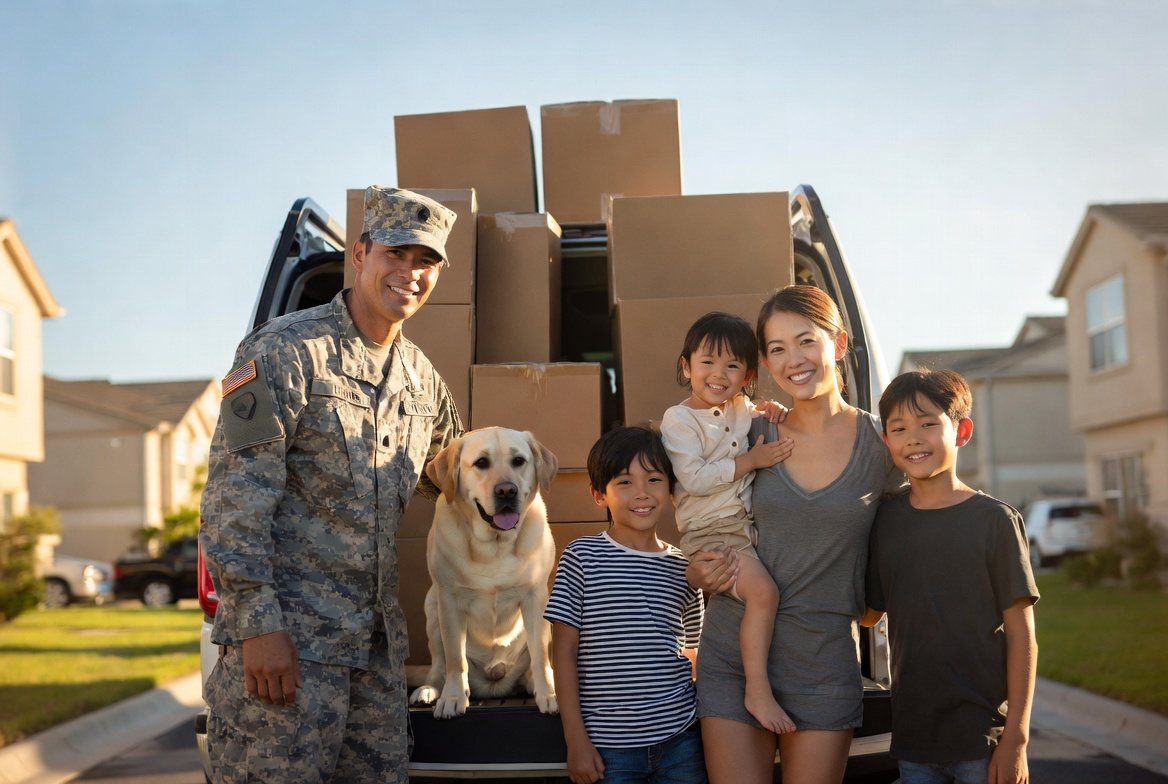
How I PCS’d with 3 Kids and a Dog – Without Burning Out (Complete 2026 Military Family Guide)
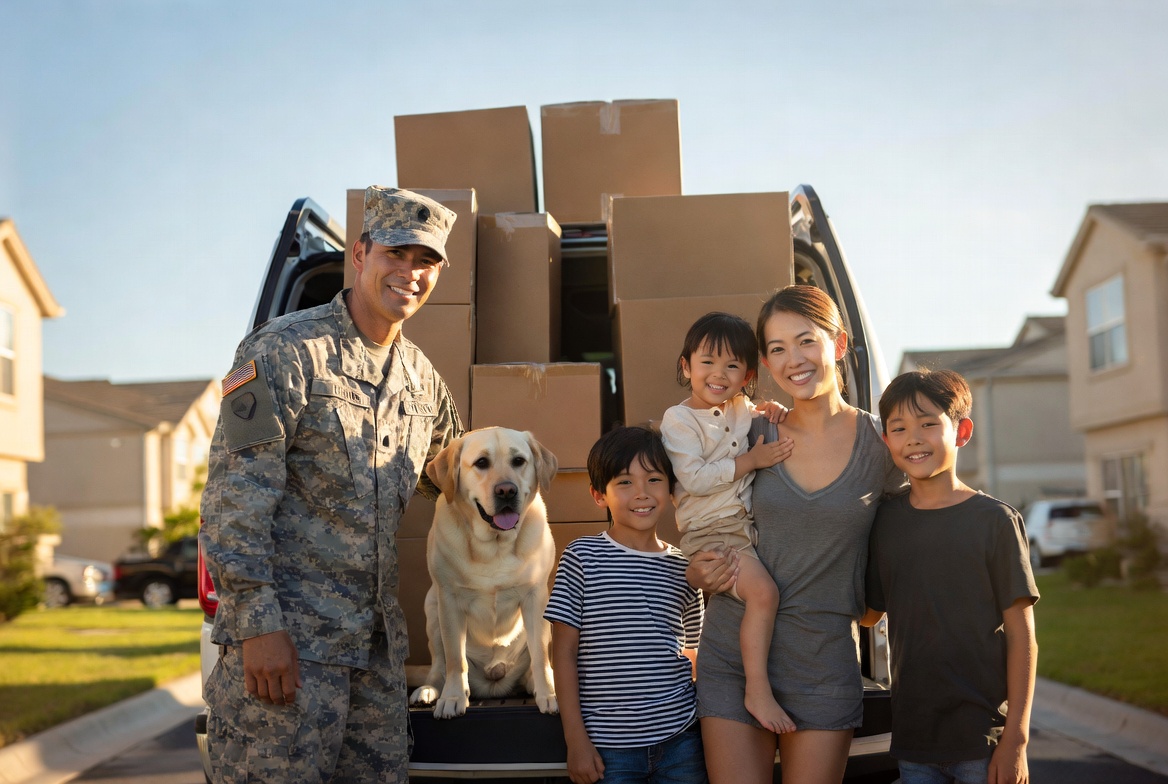
By Sarah Thompson Military Spouse, Mother of 3, and Contributor at Baseneed.com Published: May 2026
PCS season is one of the biggest stressors for military families. According to various military family surveys, families move every 2–3 years on average, often spending thousands out of pocket. When you add three children (ages 4, 7, and 9) and a 60-pound Labrador to the mix, the challenge multiplies.
Last year we completed a cross-country PCS from Fort Hood, Texas, to Fort Drum, New York – a 1,800-mile journey – with only 45 days’ notice. What could have been a nightmare became a manageable — even strengthening — experience. In this detailed guide, I share our complete story, proven strategies, checklists, and the mental health approaches that kept us sane.
---
The Reality of PCS Moves for Military Families
Military families face unique pressures during a Permanent Change of Station. Financially, many families report unreimbursed costs averaging $5,000–$8,000 per move. Emotionally, children deal with leaving friends and schools, while pets add logistical complexity with travel rules, housing restrictions, and anxiety.
We knew we had to be proactive. Our strategy rested on three pillars: early and organized preparation, realistic expectations, and intentional mental health protection.
---
6–12 Months Out: Start Early – The Foundation of Success
The single biggest mistake is waiting for orders. Start these steps as soon as possible:
Pet Preparation (Critical for 2026) - Schedule vet visits for updated vaccinations, microchip verification (ISO standard), and health certificates. - Research destination requirements — some states and all OCONUS locations have strict rules. - In 2026, service members can receive reimbursement for pet transportation: up to $550 for CONUS moves and up to $2,000 for OCONUS moves (one pet, dog or cat). Check the latest Joint Travel Regulations for details.
Children’s Documentation - Request school transcripts, IEPs/504 plans, immunization records, and birth certificates. - Begin conversations with current and future schools early.
Housing and Financial Planning - Compare on-base vs. off-base housing, paying special attention to pet policies and breed/weight restrictions. - Build a PCS budget buffer for hotels, pet fees, deposits, and unexpected costs.
Personal Anecdote: The Vet Visit That Saved Us We scheduled our dog’s vet visit four months out. The vet discovered an expired rabies vaccination and a missing ISO microchip. Fixing those took three weeks. If we had waited until 30 days out, our dog wouldn't have been allowed to travel. Don’t skip this step.
---
60–90 Days Out: Detailed Planning & Family Involvement
Create shared digital checklists (we used Google Sheets). Involve the kids by giving them age-appropriate responsibilities — it reduces anxiety and gives them ownership.
Dog-Specific Tips: - Crate training and desensitization for car rides. - Stock calming aids (vet-approved). - Prepare familiar items that smell like home.
How We Involved Each Child: - Age 4 (Lily): “Pack her own small backpack” with 3 toys and 2 books. - Age 7 (Max): Responsible for filling the dog’s travel water bottle and spotting dog parks on the map. - Age 9 (Ella): Helped create a “countdown calendar” and researched fun stops along the route.
---
The Packing Phase – Reducing Chaos at Home
We designated one room as the “Do Not Pack Zone” for kids’ comfort items and the dog’s bed/toys. This became our family’s safe space.
Recommended Packing Lists:
Family First Night / First Week Box: - Bedding, towels, paper goods, basic snacks, medications, chargers, important documents.
Dog First Night Box: - Food (several days’ supply), bowls, leash, waste bags, medications, favorite toys and blanket.
Pro Tip: Let professional packers handle most items, but personally manage sentimental, pet, and immediate-need belongings.
---
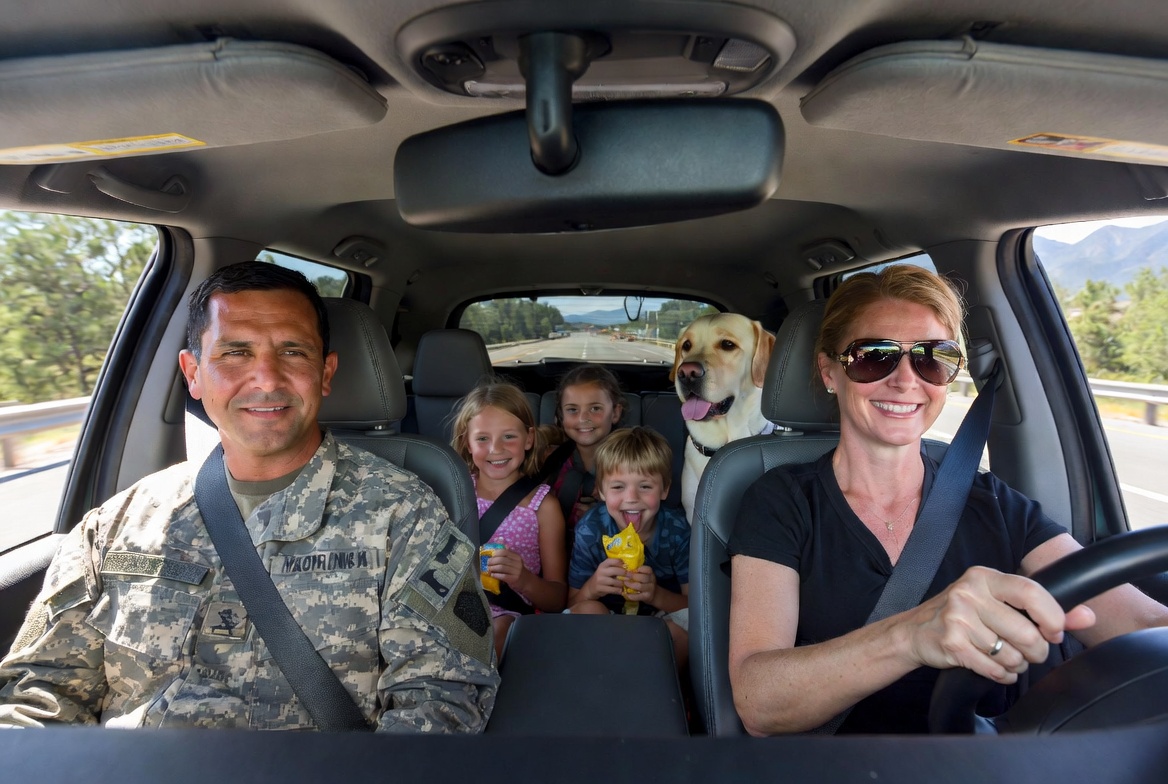
Travel Phase – Our 4-Day Cross-Country Drive
We drove instead of flying. Key lessons:
- Limit driving to 6–7 hours per day.
- Book pet-friendly hotels in advance and always reconfirm.
- Plan daily stops at dog parks and playgrounds.
- Use a rotation system between parents.
- Reveal new small toys/snacks daily to keep kids engaged.
- Protect your own mental health — I used noise-canceling headphones and evening dog walks.
Our Daily Travel Schedule (Example Day 2):
| Time | Activity |
|---|---|
| 7:00 AM | Wake up, quick dog walk, breakfast (hotel continental) |
| 8:30 AM | Load car – kids pack their own backpacks |
| 9:00 AM | Depart – first 2-hour driving block |
| 11:00 AM | Rest stop #1: dog park + playground (45 min) |
| 11:45 AM | Snack in car (new small toy revealed) |
| 1:30 PM | Lunch stop at pet-friendly fast-casual |
| 3:00 PM | Second rest stop: gas, stretch, dog bathroom |
| 5:30 PM | Arrive at hotel, pool time for kids, evening dog walk |
| 7:00 PM | Dinner (delivery or eat-in room) |
| 8:30 PM | Bedtime routine (same as home) |
---
Arrival & First 30 Days at the New Base
Focus on stability first: - Unpack kids’ rooms and the dog’s area early. - Register for school, sports, and medical care. - Join local spouse groups and base resources immediately. - Update DEERS, IDs, and all records.
First Week Prioritization Table:
| Priority Level | Task | Who Does It | Deadline |
|---|---|---|---|
| Critical (Day 1) | Unpack kids’ rooms & dog area | Both parents | Day 1 evening |
| Critical (Day 1) | Grocery run for basics | One parent | Day 1 afternoon |
| High (Day 2-3) | Register for school & pediatrician | Primary parent | Day 3 |
| High (Day 2-3) | Find local vet & refill meds | Other parent | Day 3 |
| Medium (Week 1) | Unpack kitchen & master bedroom | Both | By day 7 |
| Low (Week 2-4) | Decorate, garage, home projects | As time allows | End of month |
---
Mental Health Strategies That Made the Difference
Burnout happens when we aim for perfection. Here’s what helped us:
- Lower expectations — the house didn’t need to be perfect immediately.
- Daily family gratitude practice (even the 4-year-old joined).
- Built-in self-care: minimum 20-minute dog walks.
- Ask for help early — meals, childcare, unpacking support.
- One major task per day maximum.
Children often experience grief over lost friendships. Acknowledge their feelings and help them stay connected via video calls or social media (where appropriate).
Our Mental Health "Red Flag" List: - [ ] One parent hasn't laughed in two days - [ ] Kids are fighting more than usual - [ ] Dog is hiding or trembling - [ ] You're skipping meals or sleep to pack - [ ] You feel ashamed to ask for help
If any of these appear → Stop. Order pizza. Watch a movie. Call a friend. The boxes can wait.
---
Complete PCS Checklist 2026 (Printable / Saveable)
- [ ] Pet health records, microchip, vaccinations, destination rules
- [ ] Children’s school & medical documentation
- [ ] Housing applications (on- and off-base)
- [ ] First Night boxes for family + pet
- [ ] New base resource list (vet, schools, pediatrician, commissary, spouse groups)
- [ ] Budget buffer and reimbursement tracking
- [ ] Important documents scanned and backed up
- [ ] Pet-friendly hotel list for route
- [ ] DEERS update appointment scheduled
- [ ] Mail forwarding activated (USPS)
- [ ] Utilities set up at new home
- [ ] Old home final walk-through photos
👉 [Download the free printable PDF checklist here – Baseneed.com/pcs-checklist] (internal link)
---
Cost Comparison: On-Base vs. Off-Base Housing with a Large Dog
| Factor | On-Base Housing | Off-Base Housing (Rental) |
|---|---|---|
| Monthly BAH usage | 100% typically | You keep leftover BAH |
| Pet deposit | Often $0–$200 | $300–$800 (often non-refundable) |
| Breed restrictions | Common (labs usually fine) | Varies widely – some ban labs |
| Weight limit | Often 50–80 lbs | Some have 25–40 lb limits |
| Yard | Usually small fenced | Potential for large yard |
| Pet rent | Rare | $25–$50/month per pet |
| Proximity to base amenities | Walking/biking distance | Drive required |
| Our choice | ✅ Chosen (safety, community, no hidden fees) | Not selected due to pet deposit & commute |
Always verify with the specific base housing office and individual landlords.
---
Comparison Table: Driving vs. Flying with 3 Kids + Dog (CONUS PCS)
| Aspect | Driving | Flying |
|---|---|---|
| Duration | 4–6 days | 1 travel day + airport time |
| Cost (family of 5 + dog) | $800–1,200 (gas, hotels, food) | $1,800–3,000+ (flights, pet cargo, rental car) |
| Pet stress level | Moderate (familiar car) | High (cargo, strangers, noise) |
| Child entertainment | Frequent stops, car games | Screens, snacks, airport waiting |
| Luggage/bags limit | Unlimited in car | Strict baggage limits |
| Reimbursement eligibility | Mileage + per diem | Actual expenses capped |
| Flexibility | High – change route anytime | Low – fixed schedule |
| Our verdict | ✅ Better for large families | Only for OCONUS or extreme distance |
---
Key Takeaways
- Early preparation (especially pets and school records) prevents last-minute panic.
- Mental health is as important as logistics.
- Involve kids and treat pets as part of the team.
- Progress over perfection in the first weeks.
- Use available reimbursements and community support.
- Driving beats flying for most CONUS moves with kids and a dog.
---
FAQ – PCS with Kids and Pets in 2026
How early should I start pet preparations? 4–6 months ahead is ideal, especially for OCONUS moves.
What pet reimbursement is available in 2026? Up to $550 CONUS / $2,000 OCONUS for one pet (dog or cat). Additional options exist in special cases.
How do you keep kids calm on long drives? Routine, frequent stops, new surprises daily, and small responsibilities.
On-base or off-base with dogs? Research thoroughly — many bases have breed/weight restrictions.
What if my dog has severe travel anxiety? Work with your vet on training, possible medication, and keep familiar items close.
How do mid-year school changes work? Most schools offer flexibility for military families. Start communication early.
Can I claim pet-friendly hotel costs on my PCS claim? Yes – if the hotel is on your authorized travel route and within per diem rates. Keep all receipts.
What if my child has an IEP? Request a copy 6 months out. Contact the new school’s special education coordinator before arrival. Federal law (IDEA) protects military children.
---
Sources & Resources
- Defense Travel Management Office (DTMO) – Pet Transportation Allowance
- Military OneSource – Moving with Pets Guide
- MyNavy HR PCS Guide 2026
- Military Family Advisory Network (MFAN) PCS studies
- Navy Federal & American Military Family resources on PCS planning
- Various base-specific Facebook spouse groups
- Interstate Compact on Educational Opportunity for Military Children (for school transfers)
Additional Helpful Internal Links (Baseneed.com): - Free PCS Checklist Download → - Complete Military Housing & BAH Guide 2026 → - Pet-Friendly Base Housing by Installation → - PCS Reimbursement Cheat Sheet (2026 JTR Update) → - Military Spouse Mental Health Resource Hub →
---
What to Do Next
- 📥 Download our free PCS with Kids & Pets Checklist – click here
- 👥 Join the active Baseneed.com Military Spouse Community for real-time advice – join now
- 💬 Share your biggest current PCS challenge in the comments below — our community is supportive and experienced.
- 📌 Save and share this guide with another military family facing a move.
- 🔔 Subscribe to our PCS countdown email series – one tip per week until you move

Military life is full of transitions, but with preparation, realistic expectations, and community support, you and your family (including the four-legged members) can not only survive a PCS — you can come out stronger.
You’ve got this.
— Sarah
Sarah Thompson is a military spouse of 12 years, mom of three, and Labrador enthusiast. She writes about military life, budgeting, and family resilience at Baseneed.com.
---
Read Full Article on BaseNeed →
Related Military Life guides
- → Basic Allowance for Housing (BAH): The Complete 2026 Guide to Rates, Dependents & How It's Calculated — 13 min read read
- → Military Car Buying: The Complete 2026 Guide to Auto Loans, SCRA Protections & Avoiding Dealer Traps — 14 min read read
- → Military Spouse Income During Deployment: Stack Pay, Budget the Extra & Add Flexible Work (2026) — 8 min read read
- → Military Discount Flights: The Complete 2026 Guide to Airline Military Discounts, Free Bags & Cheap Fares — 14 min read read
- → Blended Retirement System: The Complete 2026 Guide to BRS, TSP Matching & Your Military Retirement — 14 min read read
- → Basic Training Graduation Gifts: 45+ Ideas by Branch, Budget & What Recruits Actually Want (2026) — 13 min read read