Military Life
Military Ball Attire: What to Wear, Etiquette & Traditions (2026 Guide)
Everything you need for a military ball in 2026: what to wear for women, men and every branch, plus etiquette, the POW/MIA table, a budget plan and the mistakes to avoid.
By BaseNeed Team · July 24, 2026 · 14 min read read
military ball military ball attire military ball etiquette military traditions military spouse
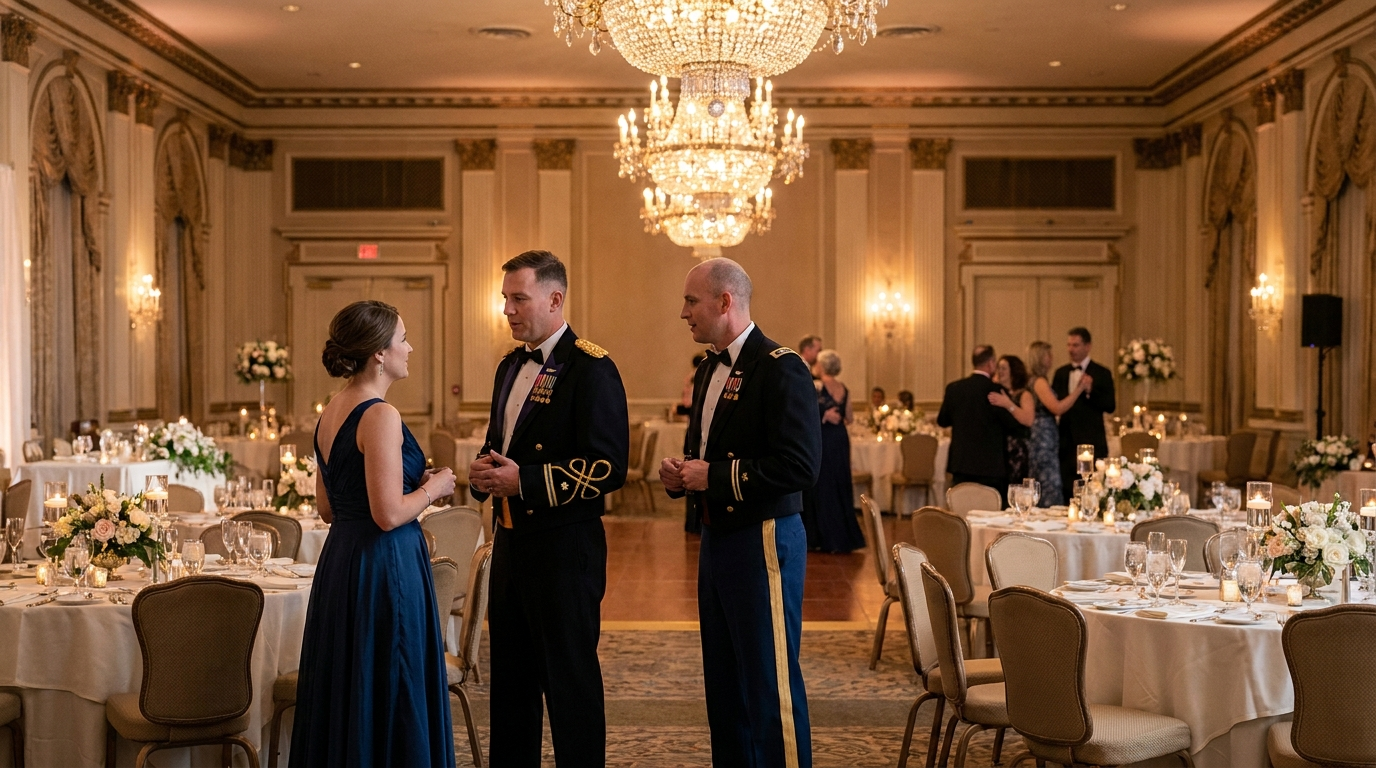
Military Ball Attire: What to Wear, Etiquette & Traditions (2026 Guide)
By the BaseNeed Team — military family resources, updated 2026
Figuring out military ball attire is the single biggest source of stress for anyone attending their first formal — and it should not be. Whether you are a service member deciding between your dress uniform options, a spouse hunting for the right floor-length gown, or a date who has never set foot on an installation, the rules are actually straightforward once someone explains them plainly. This 2026 guide walks you through exactly what to wear to a military ball for both women and men, breaks down the dress uniforms by branch, decodes the etiquette that trips up newcomers (the receiving line, the toasts, the POW/MIA table), and shows you how to look the part without overspending. By the end you will know precisely what to buy, what to avoid, and how to carry yourself with confidence.
> Affiliate disclosure: BaseNeed is reader-supported. Some links below are Amazon affiliate links (tag: baseneed04-20), and we may earn a small commission at no extra cost to you. We only suggest products we believe genuinely help military families prepare for their event.
What Is a Military Ball, Exactly?
A military ball is a formal celebration hosted by a unit, branch, or academy to honor its heritage, recognize its members, and bring families together for one dignified, dressed-up evening. Each service has its own signature event: the Marine Corps Birthday Ball every November 10, the Army Ball around the Army's June birthday, the Air Force Ball, the Navy Ball, the Coast Guard Ball, and countless unit-level, ROTC, and JROTC formals in between. The tone blends a wedding reception, an awards banquet, and a solemn remembrance ceremony into a single night.
Understanding that dual nature — celebratory and ceremonial — is the key to everything else. It explains why the dress code leans formal rather than flashy, why there are moments of silence in the middle of a party, and why punctuality and respect matter more here than at a typical night out. Once you internalize the vibe, choosing your military ball attire and navigating the customs becomes far easier.
What to Wear to a Military Ball
The invitation usually tells you the dress code, and it almost always lands in one of two categories: black tie or the less common white tie (formal). When a service member wears a dress or mess uniform, that uniform sets the formality bar for everyone else in the party. Your job as a guest is to match that level of polish.
Here is the short version before we go deep:
- Service members wear their branch's dress or mess uniform (details by branch below).
- Women (spouses, dates, and civilian guests) wear a floor-length formal gown.
- Men (civilian guests) wear a tuxedo for black tie, or a dark, well-fitted formal suit at minimum.
- Everyone errs on the side of modest, elegant, and understated rather than trendy or revealing.
The single most common mistake is under-dressing. A military ball is not a cocktail party; a knee-length dress or a sport coat with slacks will leave you feeling out of place. When in doubt, go one notch more formal.
Military Ball Attire for Women
For women, "formal" means a floor-length gown. Dresses above the knee, high-low hemlines, and most cocktail dresses are traditionally considered too casual for a military ball. Beyond length, keep these guidelines in mind:
- Silhouette and coverage: Aim for elegant and modest. Plunging necklines, high slits, cutouts, and backless designs read as too revealing for the ceremonial tone. Glamour is welcome; flashiness is not.
- Color: Conservative, sophisticated colors photograph beautifully and never look out of place — black, navy, emerald, burgundy, deep plum, and classic jewel tones. A small pop of color is fine.
- The white rule: Avoid wearing white or ivory unless you are the service member or are directly related to the one being honored. As with weddings, head-to-toe white can unintentionally pull focus.
- Fabric: Elevated materials like satin, chiffon, velvet, and crepe elevate the whole look and hold up better on a dance floor than stiff, inexpensive fabrics.
- Shoes and comfort: You will stand in a receiving line, pose for photos, and (hopefully) dance for hours. Choose heels you can survive in, and stash a pair of foldable flats in your clutch for the second half of the night.
> Popular pick: A classic floor-length formal gown in navy or burgundy works for virtually any military ball and can be re-worn for weddings and galas. View on Amazon
Accessories should complement, not compete. A simple clutch, understated jewelry, and a wrap or shawl for chilly ballrooms round out the outfit. If the ball is on an overseas installation, pack your gown in a garment bag and bring a travel steamer — hotel irons are unreliable and creases show in every photo.
> Popular pick: Cushioned foldable ballet flats slip into an evening clutch and save your feet once the dancing starts. View on Amazon
Military Ball Attire for Men (Civilian Guests)
If you are a civilian man escorting a service member, your target is a tuxedo for a black-tie ball. A black tux, white formal shirt, black bow tie, and black formal shoes is never wrong. If a tuxedo is genuinely out of reach, a well-tailored dark suit (charcoal or navy) with a conservative tie is the acceptable floor — but tailoring matters more than price. A cheap suit that fits beats an expensive one that does not.
A few details separate "trying" from "polished": a pressed shirt, a real (not clip-on) bow tie when possible, matching black belt and shoes, and no scuffed everyday work shoes. Skip novelty accessories. The service members in the room are in immaculate uniforms with precisely placed ribbons; your goal is to look like you belong beside them.
> Popular pick: A slim-fit tuxedo with a satin lapel covers black-tie balls, weddings, and reunions for years. View on Amazon
Military Dress Uniforms by Branch: Army, Navy, Air Force & Marines
If you are the service member, your military ball attire is your dress or mess uniform, and each branch uses its own terminology. Wear medals and awards exactly as your service regulations prescribe — a ball is a formal inspection as much as a party, so get the ribbons, cummerbund, and gloves right. The table below shows the most formal (mess) uniform and the common ball uniform for each branch, plus the civilian equivalent your guest should match.
Military Ball Dress Code by Branch (Comparison Table)
| Branch | Most Formal (Mess) Uniform | Commonly Worn to the Ball | Civilian Guest Equivalent |
|---|---|---|---|
| Army | Army Blue Mess | Army Service Uniform ("Army Blues") | Tuxedo / floor-length gown |
| Marine Corps | Evening Dress | Blue Dress "A" (with medals) | Tuxedo / floor-length gown |
| Navy | Dinner Dress Blue Jacket | Dinner Dress Blue | Tuxedo / floor-length gown |
| Air Force | Mess Dress | Semi-Formal Dress | Tuxedo / floor-length gown |
| Space Force | Mess Dress (rolling out) | Service Dress | Tuxedo / floor-length gown |
| Coast Guard | Formal Dress | Dinner Dress Blue | Tuxedo / floor-length gown |
A few notes that save headaches. The mess uniforms (Army Blue Mess, Marine Corps Evening Dress, Navy Dinner Dress Blue Jacket, Air Force Mess Dress) are the black-tie equivalents, but not everyone owns one — they are expensive and optional for many ranks. That is why most attendees wear the service dress version instead, which is completely appropriate. Confirm the specified uniform on the invitation or with your chain of command, verify your ribbon and badge placement against current regulations, and have everything dry-cleaned and pressed at least a few days out.
Marine Corps Ball Attire and Traditions
The Marine Corps Ball deserves its own section because it is the most tradition-rich formal in the U.S. military and the one civilian guests most often attend. Held on or near November 10 to mark the Corps' 1775 birthday, it follows a ceremony that has been refined for a century.
For attire, Marines typically wear Evening Dress (the most formal) or Blue Dress "A" with medals; civilian guests follow standard black-tie rules — a tuxedo for men and a floor-length gown for women. The atmosphere is proud and precise, so lean conservative.
The ceremony itself is unforgettable. In 1921, the 13th Commandant, General John A. Lejeune, issued Marine Corps Order No. 47, summarizing the history and mission of the Corps and directing that it be read to all Marines every November 10. That order is still read aloud at every ball, followed by the current Commandant's birthday message. The highlight is the cake-cutting ceremony, performed with a Mameluke sword: the first slice goes to the guest of honor, the second to the oldest Marine present, who then hands it to the youngest Marine — a literal passing of tradition, experience, and pride from one generation to the next. If you are a guest, hold your applause until the sequence is complete, and expect the room to come to attention more than once.
JROTC and ROTC Military Ball Attire
High school JROTC and college ROTC programs host their own military ball each year, and the attire mirrors the active-duty world at a cadet-appropriate level. Cadets usually wear their service dress uniform as issued, with ribbons and cords placed per program guidance. Civilian dates follow the same civilian rules as any ball: a floor-length gown for young women and a tuxedo or dark suit for young men.
For parents footing the bill, the good news is that a cadet ball is a lower-cost entry point — the uniform is already issued, so the main expense is the guest's outfit and the ticket. It is also a genuine rite of passage and a first lesson in military customs, from the receiving line to the grog. Encourage your cadet to learn the etiquette in advance; poise at 17 pays dividends later.
Military Ball Etiquette: Receiving Line, Toasts and the POW/MIA Table
Etiquette is where newcomers feel most exposed, so here is the map. Handle these three moments well and you will look like a veteran of the circuit.
The receiving line. Early in the evening, guests file past the host, the guest of honor, and their spouses to be greeted personally. Drop your coat and drink at your table first so your right hand is free. Offer a firm handshake, state your name clearly ("Good evening, I'm Jordan Rivera, here with Sergeant Rivera"), exchange a brief pleasantry, and keep moving — the line is long and short greetings keep it flowing.
The toasts. A series of formal toasts punctuates the program, typically honoring the Commander in Chief, the branch and its sister services, and fallen comrades. Follow the toastmaster: stand when directed, raise your glass, and respond with the room (many branches have a signature reply). You do not need to drain your glass, and non-alcoholic drinks are perfectly acceptable for every toast.
The POW/MIA (Fallen Comrade) table. Somewhere in the room sits a small round table set for one, draped in white — a single red rose, a slice of lemon, a pinch of salt, an inverted glass, a lit candle, and an empty, tilted chair. It honors service members who are prisoners of war or missing in action and cannot be present. Each element is symbolic: the lemon for their bitter fate, the salt for families' tears, the inverted glass because they cannot toast with us tonight. When the table is explained and glasses are raised, you raise yours in respect but do not drink, and you observe the moment of silence fully. It is the most solemn moment of the night; treat it that way.
You may also encounter the grog bowl — a ceremonial concoction whose ingredients each represent a piece of the unit's history and hardships. It is more common at dining-ins and cadet balls, and participation is a lighthearted, voluntary tradition.
What to Expect: A Typical Military Ball Timeline
Knowing the flow of the evening removes the last of the nerves. While every unit differs, most balls follow a recognizable arc:
- Cocktail hour and photos — arrive on time, greet friends, and take couple's photos before anyone wilts.
- Receiving line — the formal greeting of the host and guest of honor described above.
- Formal ceremony — posting of the colors, national anthem, invocation, the POW/MIA table remembrance, and a guest speaker.
- Toasts — the sequence of formal toasts led by the toastmaster.
- Cake cutting — especially central at branch birthday balls.
- Dinner — a plated meal; mind your table manners and wait for the appropriate cue to begin.
- Dancing and social time — the celebration opens up; this is when those foldable flats earn their keep.
Silence your phone before the ceremony, and never walk in front of the colors or during the invocation. If you must step out, wait for a break between segments.
Military Ball Budget: What It Costs and How to Save
A ball can get expensive fast — tickets, attire, hair, a sitter, and possibly a hotel or travel to an overseas installation. A little planning keeps it affordable. Tickets are frequently priced on a sliding scale by rank, so junior enlisted families pay less; check whether your unit or booster club offers subsidized seats. Build the evening into your monthly plan the same way you would any big expense — our 2026 military pay chart and allowances guide helps you see where a formal fits alongside your BAH and BAS.
On attire, you do not have to buy new. Borrow or rent a gown, re-wear a versatile floor-length dress in a neutral color, or shop off-season sales. Many retailers and service providers offer military pricing on formalwear, alterations, and salon services — our running list of military discounts for service members, veterans and families is worth a scan before you check out. If you are stationed overseas, coordinate transport and lodging early; ball season books up base-area hotels quickly, and you can find your installation's details through the BaseNeed military base directory.
Common Military Ball Mistakes to Avoid
Even seasoned attendees slip up. Sidestep these and your night runs smooth:
- Under-dressing. Cocktail dresses, knee-length hemlines, and sport coats read as too casual. Go formal.
- Wearing white as a civilian guest. Leave it to the honoree unless you are directly related.
- Ignoring the invitation's uniform line. For service members, the specified uniform is not a suggestion.
- Over-imbibing. You are representing your service member in a room full of their leadership. Pace yourself.
- Treating ceremonial moments as photo ops. During the POW/MIA remembrance, the anthem, and the invocation, be still and silent.
- Skipping the RSVP or arriving late. Both create real logistical headaches for the hosts and seating.
- Uncomfortable shoes with no backup. A blister by dinner ends the night early. Pack flats.
Key Takeaways
- Military ball attire is formal: floor-length gowns for women, tuxedos (or a sharp dark suit) for civilian men, and the branch's dress or mess uniform for service members.
- Match the uniform's formality and lean conservative — modest, elegant, and understated always beats trendy or revealing.
- Every branch names its formal uniform differently; confirm the specified uniform on your invitation and verify medal placement against current regulations.
- The etiquette is learnable: master the receiving line, follow the toastmaster, and observe the POW/MIA table in respectful silence.
- You can do a ball on a budget with rank-based ticket pricing, rented or re-worn attire, and military discounts on formalwear and services.
Frequently Asked Questions
What should a civilian wear to a military ball? Civilian women wear a floor-length formal gown in a conservative color; civilian men wear a tuxedo for black tie, or a well-tailored dark suit at minimum. Match the formality of the service member's dress uniform and keep the look modest and elegant.
Can you wear a short dress to a military ball? Traditionally, no. Military balls call for floor-length gowns. Cocktail and knee-length dresses are considered too casual for the formal, ceremonial tone of the evening.
What color should you avoid at a military ball? Avoid wearing white or ivory unless you are the service member being honored or are directly related to them, since head-to-toe white can pull focus. Deep, conservative jewel tones like navy, emerald, and burgundy are safe and elegant.
What do service members wear to a military ball? Their branch's dress or mess uniform — for example, Army Service Uniform or Army Blue Mess, Marine Corps Evening Dress or Blue Dress "A," Navy Dinner Dress Blue, or Air Force Mess Dress. The specified uniform is listed on the invitation.
What is the POW/MIA table at a military ball? It is a small table set for one, draped in white with a single red rose, a slice of lemon, salt, an inverted glass, a candle, and an empty chair. It honors service members who are prisoners of war or missing in action. When glasses are raised in their honor, guests do not drink.
What to Do Next
- Read the invitation carefully and note the dress code (black tie vs. formal) and, for service members, the specified uniform.
- Lock in your attire early — buy, rent, or borrow at least two weeks out so there is time for alterations and pressing.
- Assemble accessories and a comfort kit: clutch, wrap, understated jewelry, and foldable flats for the dance floor.
- Service members: prep the uniform — dry-clean it, verify ribbon and badge placement, and shine your shoes.
- Handle logistics: RSVP, arrange a sitter, and book lodging or travel if the ball is off-post or overseas.
- Brush up on etiquette so the receiving line, toasts, and remembrance moments feel natural.
More From BaseNeed
- Military spouse appreciation gifts: meaningful ideas by occasion and budget
- Military homecoming ideas: signs, outfits and welcome-home traditions
- Deployment gifts for him, her and homecoming
- Military retirement gifts by branch, rank and budget
- 2026 military pay chart: base pay, BAH, BAS and allowances
- Military discounts 2026: the complete list for service members and families
Sources and Resources
- Military.com — Military Ball Etiquette
- Marine Corps Community Services (MCCS) — History of the Marine Corps Ball
- Marine Corps Association — Marine Corps Birthday & General Lejeune's Order No. 47
- U.S. Navy — Table of Service Equivalent Uniforms (Official Uniform Regulations, PDF)
- Military OneSource — Military Life and Family Resources
BaseNeed is built by and for the U.S. military community. We turn confusing milestones — PCS moves, deployments, benefits, and yes, your first military ball — into clear, practical steps so you can show up prepared and enjoy the night. Have a tip that made your ball better? Share it with the BaseNeed community.
Read Full Article on BaseNeed →
Related Military Life guides
- → Basic Allowance for Housing (BAH): The Complete 2026 Guide to Rates, Dependents & How It's Calculated — 13 min read read
- → Military Car Buying: The Complete 2026 Guide to Auto Loans, SCRA Protections & Avoiding Dealer Traps — 14 min read read
- → Military Spouse Income During Deployment: Stack Pay, Budget the Extra & Add Flexible Work (2026) — 8 min read read
- → Military Discount Flights: The Complete 2026 Guide to Airline Military Discounts, Free Bags & Cheap Fares — 14 min read read
- → Blended Retirement System: The Complete 2026 Guide to BRS, TSP Matching & Your Military Retirement — 14 min read read
- → Basic Training Graduation Gifts: 45+ Ideas by Branch, Budget & What Recruits Actually Want (2026) — 13 min read read