Military News
The $1 Billion Hospital Rising Next to Ramstein: Inside ROBMC, the Medical Center Replacing Landstuhl
A few miles from Ramstein's east gate, the largest U.S. military hospital outside America is taking shape. Size, beds, timeline, cost - and what the move from Landstuhl means for the KMC.
By BaseNeed Team · July 24, 2026 · 12 min read read
rhine ordnance barracks medical center robmc landstuhl replacement ramstein air base kmc germany
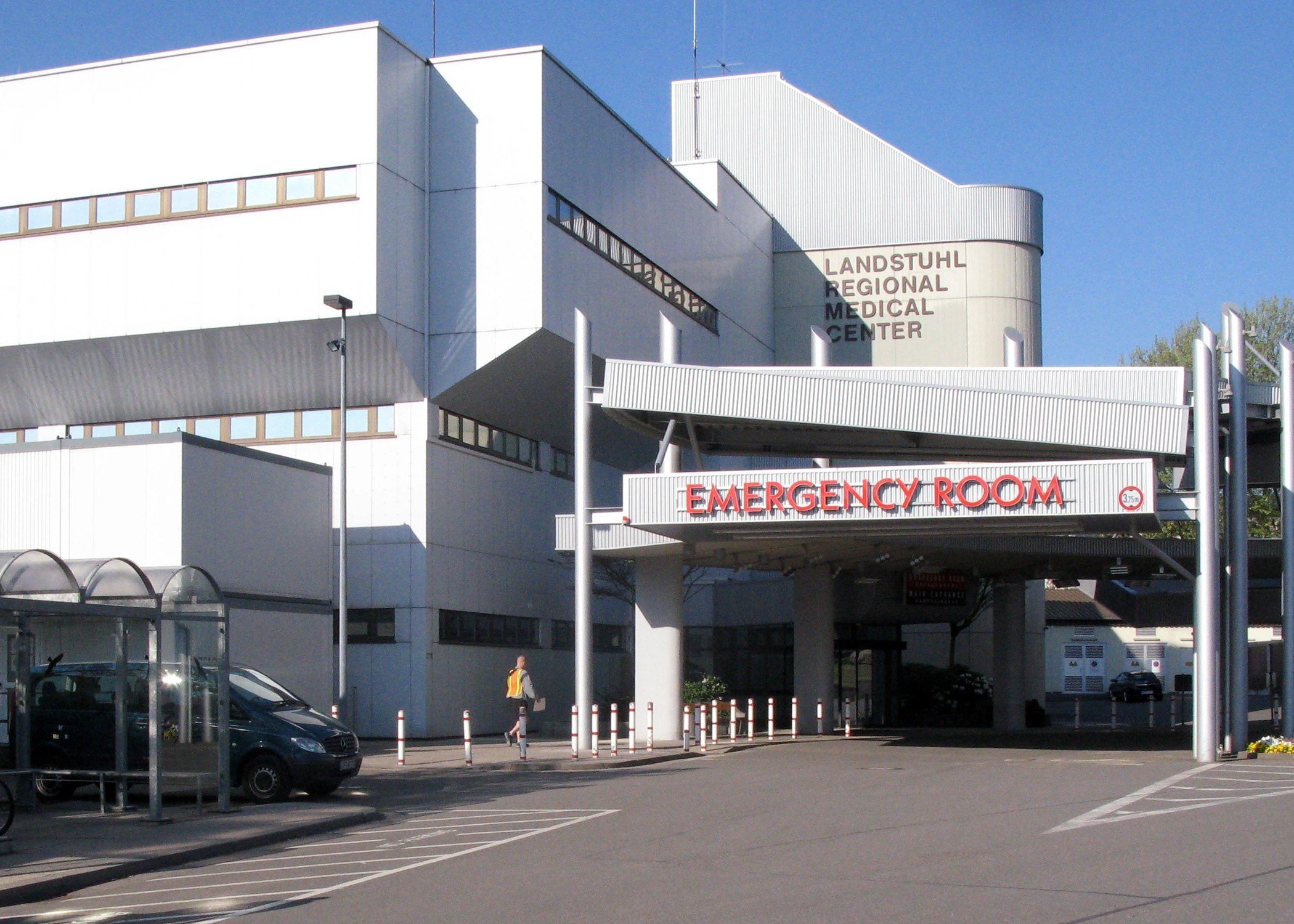
The $1 Billion Hospital Rising Next to Ramstein: Inside ROBMC, the Medical Center Replacing Landstuhl
By the BaseNeed Team — Military News · Published July 24, 2026 · Reporting from the Kaiserslautern Military Community, Germany
This week, Landstuhl Regional Medical Center made international headlines as more than 150 additional medics arrived amid the U.S.-Iran conflict. But a few miles away, largely out of the spotlight, an even bigger story in military medicine has been taking shape for over a decade: the Rhine Ordnance Barracks Medical Center — the hospital that will eventually replace Landstuhl entirely.
It is the largest U.S. military hospital ever built on foreign soil. It carries a price tag near a billion dollars. And it is going up right here in our backyard, minutes from Ramstein Air Base.
Here is everything the Kaiserslautern Military Community should know: the numbers, the timeline, why the move is happening at all, and what it means for families, careers and the region.
The Project in Numbers
Roughly 985,000 square feet. According to project specifications published by builder Gilbane, the new medical center spans about 985,000 square feet. Stars and Stripes has reported the footprint exceeds Landstuhl's by roughly 218,000 square feet — a difference of nearly four football fields.
Approximately $1 billion in total investment. In January 2022, the German Construction Administration — working in partnership with the U.S. Army Corps of Engineers Europe District and the Defense Health Agency — awarded a construction contract worth €859 million (about $970 million) to the Züblin and Gilbane joint venture. That figure came on top of nearly $200 million in already-completed campus infrastructure, including a new access control point, a bridge, utilities and roadways.
Nine operating rooms, 120 exam rooms, 68 beds — plus 25 surge beds. The facility is sized for modern, outpatient-heavy military medicine while retaining the ability to expand inpatient capacity rapidly in a crisis.
Around 2,500 staff. Stars and Stripes reports the new center is expected to employ roughly the same number of people as Landstuhl does today.
31,000 direct beneficiaries — and specialty care for 209,000 more. The hospital will serve approximately 31,000 beneficiaries in the Kaiserslautern Military Community for routine care, plus specialty services for more than 200,000 additional people across Europe.
A five-minute transfer instead of twenty. This may be the single most important number in the entire project. Hospital officials told Stars and Stripes that the new facility will cut transport time for critically injured patients medevaced through Ramstein from more than 20 minutes down to roughly five. For trauma patients, that difference is measured in survival.
Why Replace Landstuhl at All?
Landstuhl Regional Medical Center has been the backbone of American military medicine in Europe since 1953. Its history is the history of the American presence on this continent.
Its first mass-casualty test came in 1988, when Italian jets collided during an air show at Ramstein and burning debris fell into the crowd; the hospital treated 500 people that day. After the post-Gulf War drawdown, military clinics in Frankfurt, Wiesbaden and Nuremberg closed, leaving Landstuhl as the largest overseas Defense Department medical facility in Europe. Following September 11, the hospital rapidly expanded bed capacity and stood up the Deployed Warrior Medical Care Center to handle sustained combat casualty volume.
Marking 70 years of service in 2023, the Army reported that LRMC had treated more than 97,000 wounded, injured and ill U.S. troops and coalition personnel from 56 countries — evacuated from across Europe, Africa and the Middle East — with a 99 percent survival rate. In recent years the hospital has also treated Ukrainian soldiers wounded on NATO's eastern flank.
So why replace an institution with that record? Because the buildings themselves date to the 1950s. As early as 2010, military planners concluded that renovating and upgrading the aging hilltop campus would cost more than building new. Excavators began clearing forest near Ramstein for the replacement site in 2014.
The new facility also consolidates two aging institutions into one. According to U.S. Army officials, ROBMC replaces both Landstuhl Regional Medical Center and the Ramstein 86th Medical Group clinic — ending a decades-old split between the hospital on the hill and the clinic on the airfield.
The Legacy ROBMC Inherits: Medicine Invented Under Pressure
The new hospital does not just inherit Landstuhl's patients. It inherits a body of medical practice that was developed on that hill, under conditions no civilian hospital faces.
Because Landstuhl sat at the exact midpoint between the battlefield and home, its teams were forced to solve problems that had never been solved at scale: how to keep a critically wounded patient stable across thousands of miles of air transport, how to manage blast injuries arriving in waves, how to hand a patient from a forward surgical team to an intensive care unit at altitude and then to definitive care, without losing ground at any step.
Army reporting on LRMC's surgical teams documents advances that came out of that pressure — including work in en-route lung bypass and whole blood transfusion practice — and describes how the Critical Care Air Transport Team model turned transport aircraft into functioning intensive care units. Those innovations did not stay in military medicine. Trauma practice in civilian hospitals across the United States and Europe absorbed them.
That exchange runs in both directions. Landstuhl has hosted rotations of visiting civilian trauma surgeons from major American teaching hospitals — including Johns Hopkins University, the University of Cincinnati and Oregon Health and Science University — who serve two-week stints alongside military staff. It is a model that keeps skills sharp between conflicts and gives the hospital a way to scale expertise quickly when tempo rises.
The measurable result of all of it: a 99 percent survival rate across more than 97,000 patients, and roughly a fifth of combat-wounded patients from Iraq and Afghanistan returning to duty.
ROBMC is being built to carry that standard forward with modern infrastructure behind it — the same institutional knowledge, in a building designed for it rather than adapted to it.
LRMC vs. ROBMC: A Side-by-Side Comparison
Landstuhl Regional Medical Center Compared to the New Rhine Ordnance Barracks Medical Center
| Feature | Landstuhl Regional Medical Center | Rhine Ordnance Barracks Medical Center |
|---|---|---|
| Opened | 1953 | Target: construction complete 2027 |
| Size | Approx. 767,000 sq ft | Approx. 985,000 sq ft |
| Beds | 68 (historically expandable) | 68, plus 25 surge beds |
| Operating rooms | Legacy configuration | 9 |
| Exam rooms | Legacy configuration | 120 |
| Staff | Approx. 2,500 | Approx. 2,500 (projected) |
| Medevac transfer from Ramstein | More than 20 minutes | Approx. 5 minutes |
| Construction standard | 1950s-era infrastructure | Built to U.S. and German codes; LEED Silver target |
| Design method | Conventional | Full building information modeling (BIM) |
| Replaces | — | LRMC and the Ramstein 86th Medical Group clinic |
What Makes ROBMC Different
This is not simply a larger Landstuhl. The design brief reflects two decades of hard-earned lessons from combat casualty care.
Built to two national standards at once. The facility is being designed and constructed to comply fully with both U.S. and German codes and regulations — a genuinely complex undertaking that required a joint venture of American and German architects and engineers working across every discipline.
Digital from the ground up. The project was developed entirely using building information modeling, allowing systems to be coordinated virtually before anything was poured. For a hospital of this scale and regulatory complexity, that approach reduces costly conflicts during construction.
Designed for healing, not just function. The project targets LEED Silver certification, and published design documentation describes priorities such as daylight access in operating rooms and operable windows — features associated with better patient and staff outcomes rather than pure clinical throughput.
Strategically singular. The mission does not change, and it remains unique: this will be the only forward-stationed evacuation and treatment center for injured U.S. service members, civilians and contractors serving across Europe, Africa, and Central and Southwest Asia. Every casualty flown out of theater to Europe funnels here.
Positioned next to the runway. By relocating from the hill in Landstuhl to Rhine Ordnance Barracks near Ramstein, the hospital sits adjacent to the airlift hub instead of a drive away — which is exactly where the five-minute transfer time comes from.
The Timeline — Honestly
Early plans once targeted completion by 2022. That obviously did not happen, and any honest account of this project has to acknowledge the delays.
Here is the documented sequence:
- 2010 — Military planners determine that renovating the existing Landstuhl campus is not cost-effective.
- 2014 — Site clearing begins on forested land near Ramstein Air Base.
- January 2022 — The €859 million (approx. $970 million) construction contract is awarded to the Züblin-Gilbane joint venture, following nearly $200 million in completed infrastructure work.
- Autumn 2022 — Main construction begins.
- April 2023 — Program officials tell Stars and Stripes the project is on schedule and within budget, then estimated at 16 percent complete.
- August 2025 — Rhineland-Pfalz Minister President Alexander Schweitzer tours the site alongside Brig. Gen. Roger Giraud, commander of Medical Readiness Command Europe — a visible signal of the project's political weight on both sides.
- 2027 — Target for construction completion, per the Defense Health Agency.
- 2028 — Referenced in design-team documentation as the point from which the new hospital takes over from Landstuhl and the Ramstein clinic.
Given the history, treat every one of those future dates as a target rather than a promise. What is not in question is that construction is well underway and both governments remain committed.
What ROBMC Means for the KMC
For families receiving care: nothing changes today. Care continues at Landstuhl and the Ramstein clinic until the new center opens and the transition is complete. When that day comes, most beneficiaries will simply find their appointments at a newer, larger campus closer to Ramstein. If you are still working out how your coverage functions overseas, our TRICARE Prime vs. Select comparison breaks it down for OCONUS families.
For job seekers and military spouses: a 2,500-person hospital plus years of remaining construction means sustained demand — physicians, nurses, technicians, administrative staff, logistics, facilities, food service, security and skilled trades, on both the American and German side. For military spouses in particular, a stable institutional employer of that size in the KMC is rare and worth tracking. Watch the BaseNeed job board as positions post.
For families PCSing into the KMC: the region's medical footprint is one more reason this remains America's most important overseas hub, and it is a genuine quality-of-life factor when you are weighing an assignment. If you are inbound, start with our PCS binder checklist so your medical records and enrollment transfer cleanly.
For the local economy: more than a decade of construction, close to a billion dollars of investment, and a permanent institution that anchors the American presence in Rheinland-Pfalz for the next generation. German contractors, suppliers and workers have been central to the build from the start.
For the mission: a modern trauma center five minutes from the runway, sized with surge capacity, in a period when — as this month's headlines make clear — that capability is not theoretical.
Key Takeaways
- The Rhine Ordnance Barracks Medical Center will be the largest U.S. military hospital outside the United States at roughly 985,000 square feet.
- Total investment approaches $1 billion: a €859 million (approx. $970 million) construction contract plus nearly $200 million in prior campus infrastructure.
- It replaces both Landstuhl Regional Medical Center, open since 1953, and the Ramstein 86th Medical Group clinic.
- Capacity includes 9 operating rooms, 120 exam rooms and 68 beds, expandable by 25 surge beds, with roughly 2,500 staff.
- Medevac transfer time from Ramstein drops from more than 20 minutes to about five — the change with the greatest clinical impact.
- Construction completion is targeted for 2027, with the transition from Landstuhl referenced from around 2028. Timelines have slipped repeatedly since 2010.
- For the KMC, the project means years of employment opportunity and a permanent anchor for the American presence in the region.
Frequently Asked Questions
When will the Rhine Ordnance Barracks Medical Center open? The Defense Health Agency has targeted construction completion in 2027, with design-team documents referencing the transition from Landstuhl from around 2028. The timeline has been revised multiple times since planning began, so dates should be treated as targets.
How big will ROBMC be? About 985,000 square feet per the builder — the largest U.S. military hospital outside the United States — with nine operating rooms, 120 exam rooms and 68 beds, expandable by 25 surge beds.
Will Landstuhl Regional Medical Center close? Yes, eventually. ROBMC is officially the replacement for both Landstuhl Regional Medical Center and the Ramstein 86th Medical Group clinic. Until the new hospital opens and the transition completes, care continues at both existing facilities as normal.
Who will the new hospital serve? Roughly 31,000 beneficiaries in the Kaiserslautern Military Community for day-to-day care, specialty services for more than 200,000 across Europe, and casualty evacuation and treatment for U.S. personnel serving in Europe, Africa, and Central and Southwest Asia.
Will ROBMC create jobs in the KMC? Yes. The hospital is expected to employ around 2,500 people, similar to Landstuhl today, in addition to remaining construction work — creating openings for medical, administrative, logistics and skilled-trade professionals on both the American and German side.
Why does the five-minute transfer time matter so much? Because trauma outcomes are time-dependent. Hospital officials have said the new location cuts transport for critically injured patients medevaced through Ramstein from more than 20 minutes to roughly five, removing a ground transfer that currently sits between the runway and the operating room.
Where exactly is the new hospital being built? At Rhine Ordnance Barracks, on the U.S. military site just east of Ramstein Air Base near Kaiserslautern — a few miles from the existing Landstuhl campus.
Is the German government involved in the project? Yes, substantially. The construction contract was awarded by the German Construction Administration in partnership with the U.S. Army Corps of Engineers Europe District and the Defense Health Agency, and the facility must satisfy both German and U.S. building standards.
What to Do Next
- If you receive care in the KMC: keep your appointments where they are. Nothing changes until an official transition is announced through your military treatment facility.
- If you are job hunting or a military spouse building a career here: set a recurring reminder to check the BaseNeed job board and USAJOBS for Defense Health Agency postings in the KMC. Hiring for a facility this size ramps up well before opening day.
- If you are PCSing into Ramstein, Landstuhl or Kaiserslautern: review the PCS binder checklist and confirm how your family's care transfers overseas.
- If you are in construction, facilities or the trades: German and American contractors continue to supply this project. It is one of the largest ongoing builds in Rheinland-Pfalz.
- Follow the milestones. BaseNeed tracks construction updates, hiring waves and transition announcements as they are officially confirmed.
More From BaseNeed
- 150+ Medics Surge Into Landstuhl: What We Know — the news that put this hospital back in the headlines
- TRICARE Prime vs. Select: 2026 Cost Comparison
- PCS Binder Checklist: What to Include in 2026
- Ramstein Air Base — Base Guide
- Landstuhl Regional Medical Center — Base Guide
- BaseNeed Job Board — military-friendly openings across the KMC and worldwide
Sources and Resources
Official project sources - U.S. Army / U.S. Army Corps of Engineers Europe District — contract award announcement for the largest overseas U.S. military hospital (January 2022) - U.S. Army — coverage of the Rhineland-Pfalz Minister President's site visit (September 2025) - Defense Health Agency — facilities program documentation on ROBMC
Project specifications and design - Gilbane — Rhine Ordnance Barracks Medical Center Replacement project specifications - HDR — design documentation for the medical center - Affiliated Engineers — engineering planning and early-phase design documentation
Reporting and background - Stars and Stripes — construction progress, budget and hospital history coverage (April 2023) - U.S. Army — Landstuhl Regional Medical Center 70th anniversary reporting (2023)
For the community - Landstuhl Regional Medical Center official site: landstuhl.tricare.mil - USAG Rheinland-Pfalz official garrison channels - BaseNeed base guides for the KMC
---
BaseNeed is a DoD MSEP partner platform serving the military community with verified news, housing, jobs and PCS tools. This article contains no affiliate links. Figures are drawn from official U.S. Army, Defense Health Agency, contractor and Stars and Stripes sources; construction timelines are subject to change.
Read Full Article on BaseNeed →
Related Military News guides
- → GI Bill Rates Changed August 1: What It Means for Your Money — 4 min read read
- → 150+ Medics Surge Into Landstuhl: What We Know as the U.S.-Iran Conflict Intensifies — 12 min read read