Military News
150+ Medics Surge Into Landstuhl: What We Know as the U.S.-Iran Conflict Intensifies
The Wall Street Journal reports more than 150 medical personnel have arrived at Landstuhl Regional Medical Center as U.S. strikes on Iran continue. Here is what is verified, what is speculation, and what it means for the KMC.
By BaseNeed Team · July 24, 2026 · 12 min read read
landstuhl regional medical center us iran conflict military news ramstein air base kmc germany
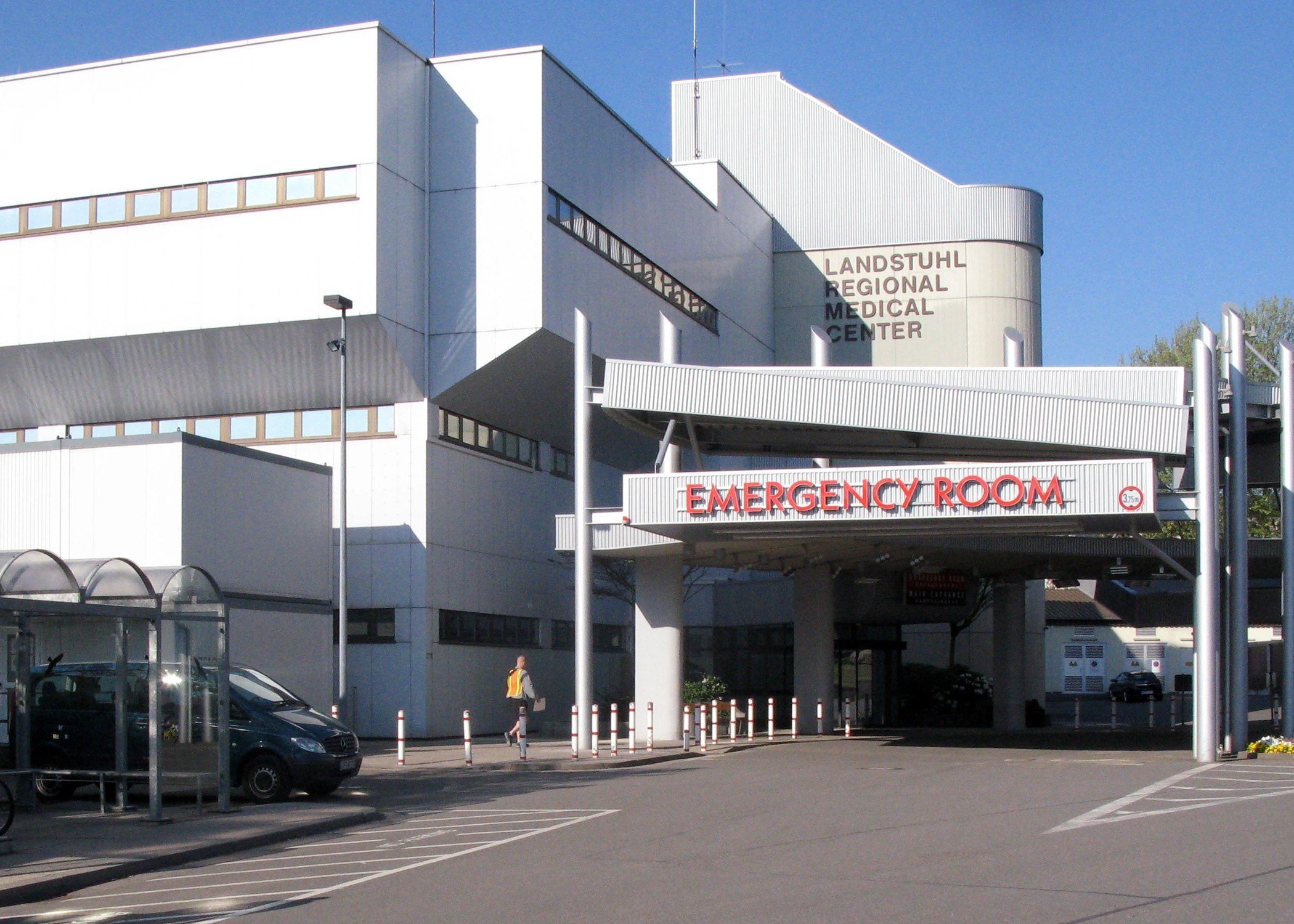
150+ Medics Surge Into Landstuhl: What We Know as the U.S.-Iran Conflict Intensifies
By the BaseNeed Team — Military News · Published July 24, 2026 · Reporting from the Kaiserslautern Military Community, Germany
More than 150 additional military medical personnel have arrived at Landstuhl Regional Medical Center in recent days, according to a Wall Street Journal report citing a U.S. official. The hospital is the primary treatment location for American troops wounded in the Middle East — and the sudden staffing surge has analysts asking whether the Pentagon is preparing for a more intense phase of the conflict with Iran.
For the military community here in the Kaiserslautern Military Community, this is not an abstract headline. Landstuhl is our hospital. The flight line those casualties would arrive on is Ramstein's. The medics who just arrived are being housed in our neighborhoods, and the spouses reading this may work in that building.
So instead of adding to the noise, this article does something different: it separates what is verified from what is speculation, explains why this particular hospital matters so much, and lays out what — if anything — families here should actually do about it.
What We Know: The Verified Facts
The medic surge is real. The Wall Street Journal reported that more than 150 medics arrived at Landstuhl Regional Medical Center in recent days, attributing the information to a U.S. official. The report notes that LRMC is the primary location for treating troops injured in combat in the Middle East. Officials quoted in the reporting did not state the purpose of the reinforcement, and no public affairs release has detailed the deployment.
Nightly strikes on Iran are ongoing. U.S. Central Command confirmed it completed its 11th consecutive evening of strikes against Iran on July 21, with operations continuing since. Publicly announced target categories include Iranian military operations centers, maritime strike capabilities, aircraft hangars, drone storage facilities and military logistics infrastructure. CENTCOM has stated that more than 50,000 U.S. service members remain stationed across the region.
American service members have been killed. Four U.S. soldiers were killed in Iranian drone attacks in the region. Their dignified transfer took place at Dover Air Force Base on July 22, attended by the President. Additional casualties have been reported by CENTCOM in subsequent days.
Europe-based airpower is committed to the fight. Stars and Stripes reported on July 22 that all three of the Air Force's permanently assigned fighter wings in Europe have deployed aircraft to the Middle East within days of each other. That includes the 480th Fighter Squadron's F-16 "Wild Weasels" from Spangdahlem Air Base — a unit that had only recently returned home from a prior combat rotation — plus F-35s from RAF Lakenheath in England, F-15Es, and accompanying aerial refueling tankers, according to reporting by Air and Space Forces Magazine. B-1B bombers remain forward-deployed at RAF Fairford in the United Kingdom.
The strategic picture. These deployments follow the collapse of a temporary U.S.-Iran ceasefire that had been negotiated in June. A U.S. naval blockade of Iranian ports has been reimposed, multiple carrier strike groups are operating in the CENTCOM area of responsibility, and the Strait of Hormuz has been the central flashpoint of the maritime conflict since major combat operations began earlier this year.
The Conflict Timeline: How We Got Here
Understanding the medic surge requires understanding the arc of the past several months. Here is the publicly documented sequence:
- Late February 2026: Major combat operations against Iran are announced, opening with joint U.S.-Israeli strikes on military, government and infrastructure targets.
- Spring 2026: A 39-day initial campaign significantly depletes U.S. interceptor inventories. Analysis from the Center for Strategic and International Studies indicates Patriot stocks fell by roughly half, with THAAD inventories similarly drawn down.
- June 2026: U.S. and Iranian delegations enter negotiations aimed at a war-ending agreement, resulting in a signed memorandum of understanding. Limited strikes continue despite the talks.
- July 7, 2026: Following attacks on shipping, CENTCOM strikes more than 80 targets, focused on Iran's maritime strike network in and around the Strait of Hormuz.
- Mid-July 2026: The ceasefire framework collapses. Iranian missiles are launched toward U.S. positions and regional states. Fighter squadrons from Germany and the U.K. begin surging toward CENTCOM.
- July 21-22, 2026: CENTCOM completes an 11th consecutive night of strikes. Four fallen American service members are returned home at Dover.
- July 23, 2026: The Wall Street Journal reports the arrival of 150+ medics at Landstuhl.
Why Landstuhl Matters So Much
To understand why a hospital staffing report makes international news, you have to understand what Landstuhl Regional Medical Center is.
LRMC is the largest American hospital outside the United States. It opened in 1953 and has served as the medical backbone of the American presence in Europe for more than seven decades. Its first major mass-casualty test came in 1988, when Italian jets collided during an air show at Ramstein and burning debris fell into the crowd of German and American spectators; the hospital treated 500 people that day, according to Stars and Stripes.
After the post-Gulf War drawdown in Europe, military clinics in Frankfurt, Wiesbaden and Nuremberg closed, leaving Landstuhl as the largest overseas Defense Department medical facility on the continent. Then came the wars that followed September 11, and the hospital rapidly expanded bed capacity and stood up the Deployed Warrior Medical Care Center specifically to handle large volumes of combat casualties.
The numbers from that era explain everything about this week's headline. Marking its 70th anniversary in 2023, the Army reported that the LRMC team had treated more than 97,000 wounded, injured and ill U.S. troops and coalition personnel from 56 countries, evacuated from across Europe, Africa and the Middle East — with a 99 percent survival rate. Army reporting from the height of the wars documented roughly 66,000 patients treated from Iraq and Afghanistan since 2004, of which approximately 14,000 were battle injuries, and noted that 20 to 21 percent of those patients were able to return to duty.
Thousands of American families have a service member alive today because of that building on the hill.
How the Medevac Chain Actually Works
The reason a staffing increase at Landstuhl reads as a readiness signal — rather than routine personnel churn — is the specific role LRMC plays in a system built over two decades.
When a service member is wounded downrange, the chain runs from point-of-injury care to a forward surgical facility, then onto a long-range aeromedical evacuation flight. Those flights are staffed by Critical Care Air Transport Teams — an intensive-care physician, a critical care nurse and a respiratory therapist, with the equipment to run an ICU at altitude, as part of the Air Force aeromedical evacuation system.
Those aircraft land at Ramstein. Patients are received by contingency aeromedical staging personnel and moved by ground the short distance to Landstuhl, where they receive what military doctors call definitive care — stabilizing and treating the injury before the patient continues on to a stateside hospital.
Landstuhl's capacity is also deepened by rotations of visiting civilian trauma surgeons from major American teaching hospitals, who spend two-week stints alongside military staff. That model exists precisely so surge capability can be scaled when the tempo rises.
In other words: when you add 150 medics to that specific node in that specific chain, you are increasing the number of casualties the system can absorb.
Confirmed vs. Speculation: Read This Table Carefully
The most important service any outlet can offer right now is a clean line between fact and interpretation. Here is that line:
What Is Confirmed and What Remains Speculation
| Claim | Status | Source | What It Does Not Prove |
|---|---|---|---|
| 150+ medics arrived at LRMC | Confirmed (via reporting, not an official release) | Wall Street Journal, citing a U.S. official | That a ground invasion or specific operation is planned |
| 11+ consecutive nights of strikes on Iran | Confirmed | U.S. Central Command releases | That the campaign is escalating rather than continuing |
| F-16s from Spangdahlem deployed to CENTCOM | Confirmed | Stars and Stripes; Air and Space Forces Magazine | That aircraft based in Germany are striking from Germany |
| Four U.S. service members killed | Confirmed | CENTCOM; dignified transfer at Dover, July 22 | — |
| Buildup means an imminent large-scale offensive | Speculation | Analyst interpretation; WSJ frames it as giving the President options | Options are not decisions |
| KMC families face a direct threat | Not supported | No official force-protection change announced | — |
Medical staffing is capacity, not intent. Militaries reinforce hospitals to be ready for a worst case, and visible readiness moves are also signaling tools inside a pressure campaign. Nobody outside a small circle in Washington knows which of those this is. Anyone telling you with certainty is guessing.
What This Means for Military Families in the KMC
Officially, nothing has changed for the community. No garrison-wide force protection condition changes, curfews or family restrictions have been announced alongside these reports. Your first and only authoritative source for anything that affects daily life on post is your garrison and command channel — not a Facebook group, and not a screenshot.
Expect a visibly higher operational tempo. More aircraft movement around Ramstein and Spangdahlem, more traffic at the gates, longer duty days for medical and aeromedical units. If your spouse works in a medical or aeromedical field, expect schedule volatility. That is what a readiness posture looks like from the ground, and it is not by itself a warning sign.
Mind your OPSEC — this one is not optional right now. Do not post flight schedules, aircraft tail numbers, unit movements, hospital arrivals, convoy timing or anything you observe on or near the flight line. Do not share photos with identifiable aircraft configurations. The families of deployed service members are counting on every person in this community to hold that line.
Quietly check your family readiness basics. Not out of fear — out of habit. If your household has not reviewed its power of attorney and legal readiness in a while, or your deployment packing list is two PCS moves out of date, this is a reasonable week to update them. Confirm that your family care plan, emergency contacts and DEERS information are current, and make sure you know how your TRICARE coverage works when you are stationed overseas.
Watch the kids. Children in military communities absorb far more from headlines, hallway conversations and school chatter than adults assume — particularly when a parent is deployed or on alert. Age-appropriate honesty works better than silence.
Support exists, and using it is normal. Military OneSource (800-342-9647) is available 24/7, along with unit chaplains, Military and Family Life Counselors, and your garrison's family readiness personnel. If this news is sitting heavier on you than you expected, that is a common reaction in a community that has been through deployment cycles before.
Key Takeaways
- More than 150 medics have arrived at Landstuhl Regional Medical Center, per Wall Street Journal reporting citing a U.S. official. No official purpose has been stated.
- LRMC is the primary treatment hospital for American troops wounded in the Middle East, with more than 97,000 patients treated across its history and a 99 percent survival rate.
- U.S. Central Command has conducted more than eleven consecutive nights of strikes on Iran; four American service members have been killed.
- F-16s from Spangdahlem Air Base and F-35s from RAF Lakenheath have deployed to the CENTCOM region, along with tankers and other Europe-based airpower.
- A staffing surge at a casualty-reception hospital increases capacity. It does not confirm that a specific larger operation has been ordered.
- No force protection or family-life changes have been officially announced for the Kaiserslautern Military Community.
- The most useful actions for families right now are strict OPSEC, current readiness documents, and following official garrison channels only.
Frequently Asked Questions
Why did 150 medics arrive at Landstuhl Regional Medical Center? The Wall Street Journal reported the arrivals citing a U.S. official, without an official statement of purpose. Analysts interpret the surge as trauma-capacity building amid ongoing U.S. strikes on Iran, since LRMC is the primary hospital for troops wounded in the Middle East.
Is Landstuhl really the main hospital for troops wounded in the Middle East? Yes. LRMC is the largest American hospital outside the United States and served as the primary receiving hospital for casualties throughout the Iraq and Afghanistan wars, connected directly to the aeromedical evacuation hub at Ramstein Air Base.
Are U.S. bases in Germany directly involved in the Iran conflict? Yes, in supporting roles. F-16s from Spangdahlem's 480th Fighter Squadron have deployed to the CENTCOM region, Ramstein serves as the key airlift and aeromedical hub, and Landstuhl is the designated casualty treatment center, according to Stars and Stripes and Air and Space Forces Magazine.
Should military families in the KMC be worried? No changes to family life or force protection have been officially announced. Readiness moves are not the same as confirmed escalation. Families should follow garrison and command channels for anything that actually affects the community, and practice good OPSEC online.
How many patients has Landstuhl treated over its history? The Army reported in 2023 that LRMC had treated more than 97,000 wounded, injured and ill U.S. and coalition personnel from 56 countries, with a 99 percent survival rate, across seven decades of operation.
What is a Critical Care Air Transport Team? It is a three-person Air Force team — an intensive care physician, a critical care nurse and a respiratory therapist — that turns a transport aircraft into a flying ICU so critically wounded patients can survive the flight from theater to Landstuhl.
Where can I follow verified updates on the U.S.-Iran conflict? Stick to primary and established sources: official U.S. Central Command releases, Stars and Stripes, Military Times and major wire services. BaseNeed summarizes verified developments for the military community without speculation.
What to Do Next
- Follow official channels only. Bookmark your garrison's official page and your unit's notification system. Turn on alerts there, and treat everything else as unverified.
- Run a 20-minute readiness check tonight. Confirm your power of attorney is current and unexpired, your DEERS enrollment is accurate, your family care plan is signed, and your emergency contact list is up to date.
- Set an OPSEC rule for your household. No photos, times, tail numbers or movement details posted publicly — including in private community groups, which are not private.
- Save the support numbers now, before you need them. Military OneSource: 800-342-9647. Add your unit chaplain and your MFLC to your phone.
- Talk to your kids once, calmly. Ask what they have heard, correct what is wrong, and tell them who they can talk to at school.
- Check back here for verified updates. BaseNeed will publish confirmed developments that specifically affect the KMC — and will say plainly when something is unconfirmed.
More From BaseNeed
- The $1 Billion Hospital Rising Next to Ramstein: Inside ROBMC — the medical center that will replace Landstuhl
- Military Power of Attorney: A Deployment Guide
- Deployment Packing List 2026: The Complete Checklist
- TRICARE Prime vs. Select: 2026 Cost Comparison
- Landstuhl Regional Medical Center — Base Guide
- Ramstein Air Base — Base Guide
Sources and Resources
Primary reporting - The Wall Street Journal — report on U.S. force posture and the arrival of medical personnel at Landstuhl (July 23, 2026) - Stars and Stripes — coverage of Europe-based fighter wing deployments (July 22, 2026) - Air and Space Forces Magazine — reporting on F-16 and F-35 movements to CENTCOM (July 2026) - U.S. Central Command — official operational releases
Institutional background - U.S. Army — Landstuhl Regional Medical Center 70th anniversary reporting (2023) - U.S. Army — reporting on LRMC surgical teams and the aeromedical evacuation system - Stars and Stripes — LRMC history and hospital replacement coverage (April 2023)
Support resources for families - Military OneSource: 800-342-9647 (24/7) - Your unit chaplain and Military and Family Life Counselor - USAG Rheinland-Pfalz official garrison channels
---
BaseNeed is a DoD MSEP partner platform serving the military community with verified news, housing, jobs and PCS tools. This article contains no affiliate links. Our thoughts are with the medical professionals at Landstuhl — and with every family whose service member is downrange right now.
Read Full Article on BaseNeed →
Related Military News guides
- → GI Bill Rates Changed August 1: What It Means for Your Money — 4 min read read
- → The $1 Billion Hospital Rising Next to Ramstein: Inside ROBMC, the Medical Center Replacing Landstuhl — 12 min read read