Deployment
Deployment Packing List: The Complete 2026 Checklist for Every Branch
The complete 2026 deployment packing list for Army, Navy, Air Force and Marines — core gear, branch-specific strategy, a pre-deployment paperwork checklist, and what NOT to pack.
By BaseNeed Team · July 14, 2026 · 16 min read read
deployment packing list deployment checklist pre deployment checklist military deployment deployment gear
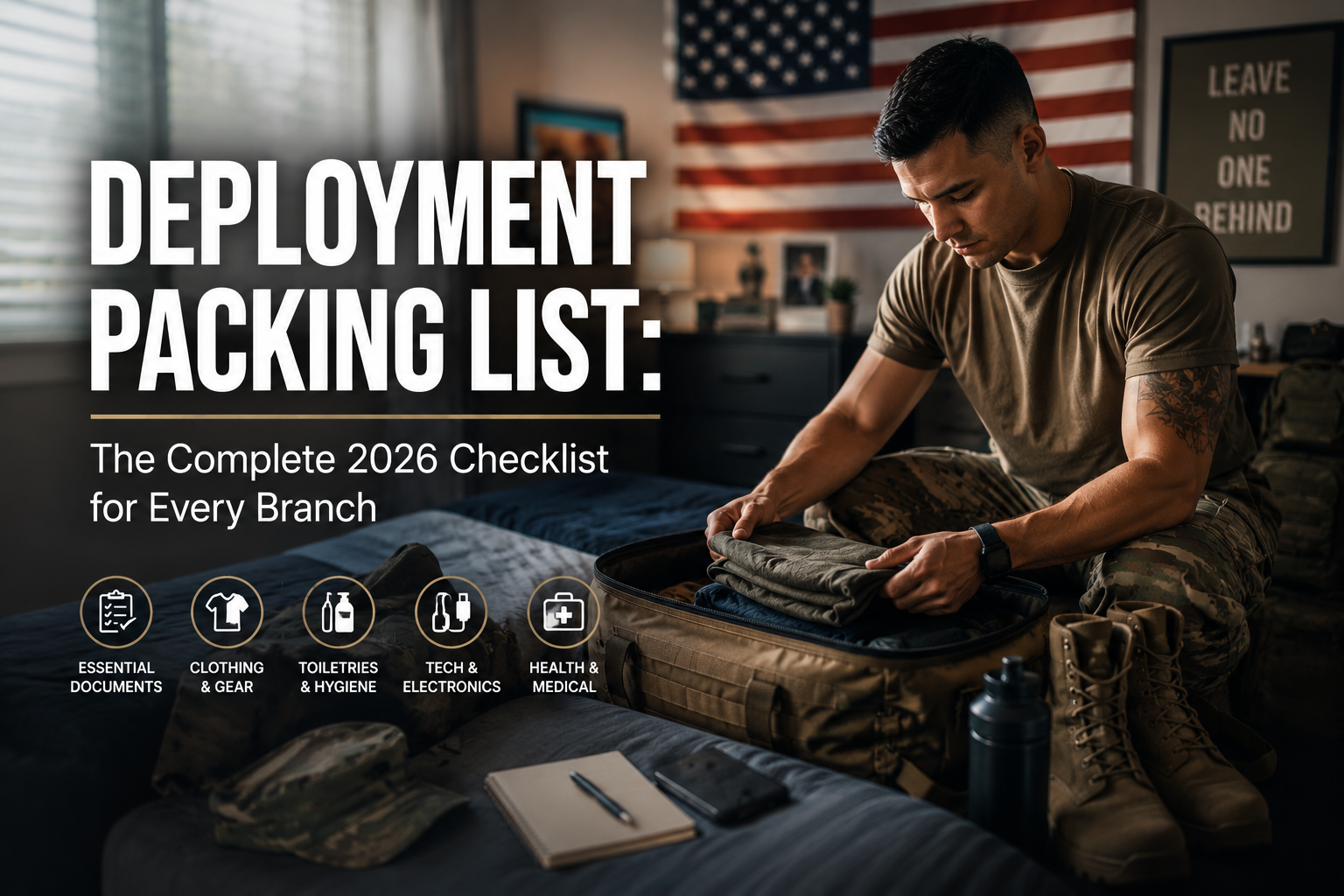
Deployment Packing List: The Complete 2026 Checklist for Every Branch
By the BaseNeed Team — military family resources, updated 2026 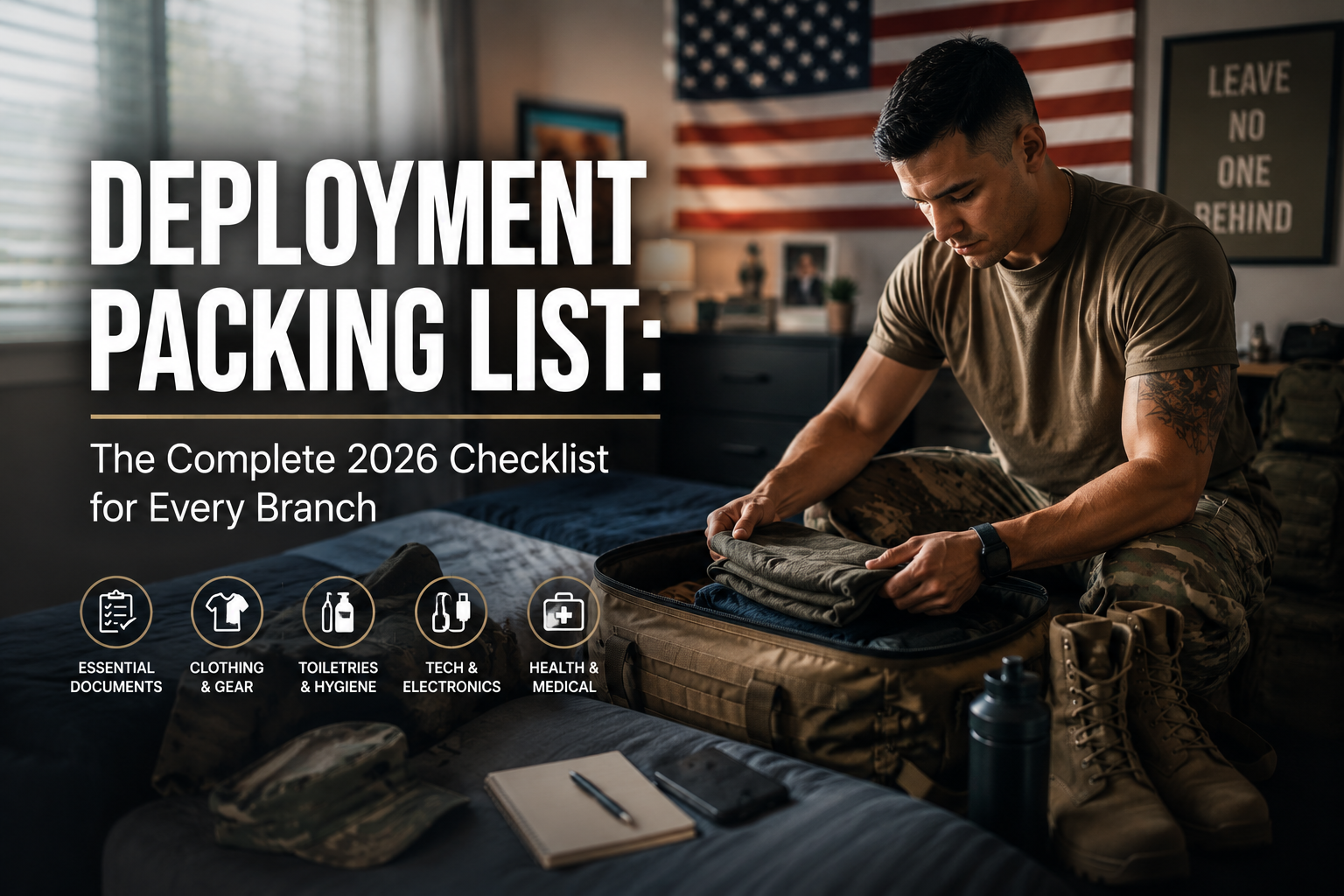 Your deployment packing list is the difference between a smooth first week downrange and three months of waiting on care packages to fix what you forgot. Whether this is your first deployment or your fifth, the challenge is always the same: fit six to twelve months of life into two duffel bags, a ruck, and maybe a footlocker — without hauling gear you will never touch. This guide is the complete 2026 deployment packing list, built from the collective experience of soldiers, sailors, airmen, and Marines, organized by branch, with a pre-deployment paperwork checklist, a what-not-to-pack section, and the comfort items veterans of multiple deployments swear by.
> Affiliate disclosure: This article contains Amazon affiliate links. If you buy through them, BaseNeed may earn a small commission at no extra cost to you. It helps us keep resources like this free for the military community.
Deployment Packing Checklist: The Core Items Every Service Member Needs
Every deployment packing checklist starts with the same foundation, no matter your branch or destination. Your unit will publish a mandatory packing list — that list wins every argument. What follows covers the mandatory categories plus the items experienced service members add on top.
Documents and Admin
- Government ID and CAC (obviously — but double-check the expiration date against your deployment window)
- Copies of orders (multiple physical copies plus digital scans in your email and cloud storage)
- Power of attorney documents completed and copies distributed — see our military power of attorney deployment guide for which type you actually need
- Emergency contact card, updated DD Form 93, and confirmed SGLI beneficiaries
- International driver's license if your destination allows off-installation driving
- A small notebook with critical phone numbers written down — phones die, get lost, and get confiscated in some locations
Uniforms and Clothing
- Uniforms per your unit's directive (typically 3–4 sets of your duty uniform)
- Boots: one pair broken in on your feet, one pair broken in in the bag — never deploy with brand-new boots as your only pair
- Underwear and socks for 10–14 days between laundry cycles; synthetic or merino wool, never 100% cotton for socks
- PT gear (2–3 sets), shower shoes, sleepwear
- Weather-specific layers: even desert locations drop near freezing at night in winter months
- One set of civilian clothes if authorized (check your theater's guidance first)
Hygiene and Health
- 90-day supply of prescription medications in original containers, plus copies of the prescriptions
- Extra glasses (two pairs) and your prescription; contacts are banned or impractical in many deployed environments
- Full hygiene kit plus backups of the things that vanish fastest: razors, nail clippers, lip balm with SPF
- Baby wipes — the universal currency of deployed hygiene when showers are rationed
- Foot powder, moleskin, and a small first-aid kit
- Sunscreen and insect repellent appropriate to your theater
Sleep and Comfort
- Quality sleep mask and multiple sets of earplugs — tents and berthing areas are loud and lit 24/7
- Compact camp pillow and a poncho liner ("woobie") or lightweight sleeping bag liner
- Twin sheets if you'll have a mattress; many FOB mattresses come bare
> Popular pick: Compression packing cubes are the single most-recommended organization upgrade for a deployment duffel — they roughly double usable space and keep laundry separated. View on Amazon
Pre Deployment Checklist: Paperwork and Life Admin Before You Go
The gear list gets the attention, but the pre deployment checklist for your legal, financial, and family affairs is what actually protects your household while you're gone. Work through this 30–60 days out.
Legal:
- Execute powers of attorney (general and/or special) through your installation legal office — free at JAG
- Update or create your will and confirm SGLI/FSGLI beneficiary designations
- Update your DD Form 93 (Record of Emergency Data)
- Review your Family Care Plan if you have dependents (mandatory for single parents and dual-military couples)
Financial:
- Set up allotments or automatic payments for every recurring bill
- Notify your bank and credit card companies of your deployment to prevent fraud freezes
- Ask about SCRA benefits — the Servicemembers Civil Relief Act caps pre-service loan interest at 6%
- Plan for the Savings Deposit Program (SDP): up to $10,000 earning 10% annually while deployed to eligible areas
- Review your Thrift Savings Plan contributions — combat zone tax exclusion months are the best time to max Roth TSP contributions, as explained in our military TSP guide
- Understand your deployment entitlements — Family Separation Allowance, Hostile Fire/Imminent Danger Pay, and the Combat Zone Tax Exclusion can add hundreds per month; our 2026 military pay chart guide breaks down every allowance
Family and household:
- Set communication expectations with your family — frequency, platforms, and OPSEC ground rules
- Leave a "how the house works" document: account logins (in a password manager), utility contacts, vehicle maintenance schedule
- Pre-address envelopes or share your APO/FPO address format with everyone who will send mail
- Store your vehicle properly or transfer insurance to storage coverage
- Talk to your spouse about care packages early — knowing what's actually useful prevents wasted postage
Army Deployment Packing List: Ruck, Duffels, and What Goes Where
The Army typically authorizes two duffel bags, a ruck, and an assault pack, with unit-issued gear (OCIE) taking up most of one duffel. The strategy that works: pack by access priority.
Assault pack (with you at all times): documents, medications, one uniform change, hygiene basics, electronics, chargers, snacks, and anything you cannot afford to lose. Assume your duffels will be separated from you for the first 72 hours of travel — because they often are.
Ruck: sleep system, weather layers, boots #2, and the first week of consumables.
Duffels (palletized, arrives when it arrives): everything else — extra uniforms, bulk hygiene, comfort items, and the twin sheets you'll be glad you packed.
Soldiers on their second or third rotation consistently add: a headlamp with red-light mode, 550 cord, a door wedge (privacy and security in shared quarters), zip ties, a small roll of duct tape, and a power strip — outlets are the scarcest resource on any FOB.
Navy Deployment Packing List: Sea Bag Strategy for Ship Life
A navy deployment packing list has one constraint the other branches don't: your entire life fits in a coffin locker and a small stand-up locker. Space discipline beats quantity every time.
- Uniforms per ship's instruction, rolled, with extra name tapes and rank insignia
- Shower shoes are non-negotiable; athlete's foot spreads through berthing like wildfire
- Magnetic hooks and command strips — the walls are steel, and vertical space is the only free real estate
- A quality towel that dries fast (microfiber), because nothing air-dries below decks
- Sea sickness remedies for the first two weeks, even if you think you don't need them
- Small bills and quarters for vending machines and port calls
- External hard drive loaded with movies and shows — ship Wi-Fi, where it exists, is slow and rationed
- Earbuds AND over-ear noise-canceling headphones; berthing is never quiet
- A compact laundry bag with your name stenciled, plus extra laundry detergent pods if your ship allows them
Port call tip: pack one civilian outfit that meets liberty dress standards. Sailors who skip this end up buying overpriced clothes in the first port.
Air Force Deployment Packing List: What Airmen Actually Use
The air force deployment packing list tends to be governed by your AEF reporting instructions and mission set, and airmen often deploy to established bases with better infrastructure — which changes the calculus.
- Follow your reporting instructions exactly for uniforms and IPE; shortfalls get flagged at the deployment line
- Deployed base exchanges (BX) exist at larger locations, so bulk consumables matter less — but assume small sites have nothing
- Quality of life items rank higher: coffee setup (French press or pour-over kit), decent pillow, mattress topper if weight allows
- Laptop or tablet with downloaded entertainment; many AF sites have usable Wi-Fi for a monthly fee
- Job-specific gear: maintainers want extra gloves and boot insoles; aircrew want extra flight suits beyond the minimum
> Popular pick: A travel power strip with USB-C ports turns one contested outlet into a charging station for your whole pod — consistently the most borrowed item on deployment. View on Amazon
Female Deployment Packing List: What Women Wish They'd Packed
The standard-issue packing list was not written with women in mind, and every female deployment packing list thread says the same thing: bring your own supply of the items the exchange never stocks in the right type or size.
- 6–12 months of your preferred menstrual products, or a menstrual cup plus backup — deployed exchanges stock limited brands, sizes, and quantities
- Sports bras: more than you think (5–7), because laundry cycles are unreliable and replacements are impossible to size by mail
- Hair supplies for regulation styles: quality hair ties, bobby pins, gel, dry shampoo for water-restricted days
- Your skincare and hygiene brands — the BX carries one option, and it won't be yours
- UTI and yeast infection OTC treatments; medical care downrange is capable but not always convenient or private
- A wrap or long towel for shared shower facilities, plus a shower caddy that hangs
- Birth control: talk to your provider about a full deployment supply or long-acting options before you leave
Many of these apply to anyone with specific brand or fit needs: if a product matters to your daily comfort and has a size or formula, bring your own supply.
What NOT to Pack for Deployment
Every returning service member has a list of things that never left the duffel. Save the space and weight:
- Excessive civilian clothes — one outfit, maybe two if port calls or authorized off-base travel are likely
- Full-size anything — toiletries in full-size bottles are weight you'll replace at the exchange anyway
- Expensive jewelry and heirlooms — theft happens, and there is nowhere to wear it
- More than two books — bring an e-reader; a loaded Kindle weighs less than one paperback
- Prohibited items — alcohol, certain medications, and pork products in some host nations; General Order No. 1 and customs rules for your theater are not suggestions
- Anything you'd cry about losing — bags get lost, rooms get flooded, and pallets sit in the rain
- Cash beyond a small emergency reserve — Eagle Cash cards and deployed finance offices handle money downrange
- Weapons accessories not on the authorized list — personal optics and slings often get confiscated at the deployment line
The golden rule from every senior NCO: if you're on the fence, leave it — someone can mail it to you in two weeks through the APO/FPO system, but you can't mail weight allowance back home.
Deployment Packing List by Branch: Comparison Table
| Category | Army | Navy (Ship) | Air Force | Marine Corps |
|---|---|---|---|---|
| Typical bag allowance | 2 duffels + ruck + assault pack | Sea bag + carry-on | 2–3 bags per reporting instructions | Sea bag + main pack + day pack |
| Storage space at destination | Shared tent/CHU, footlocker | Coffin locker + small locker (smallest) | Dorm/CHU, often best QoL | Shared tent, footlocker |
| Exchange (BX/PX/NEX) access | Varies; assume limited | Ship's store: very limited | Usually good at established bases | Often most austere |
| Laundry cycle | 3–7 days, contractor or self | Ship laundry, ~weekly | Self-serve, usually reliable | Varies; assume 7+ days |
| Priority items | Power strip, headlamp, 550 cord | Magnetic hooks, shower shoes, hard drive | Coffee kit, mattress topper | Extra socks, foot care, baby wipes |
| Electronics feasibility | Moderate | Limited (space + policy) | Best | Most limited |
Electronics, Comfort, and Morale Items Worth Their Weight
Six months in, the gear that matters most is rarely tactical. These are the items multi-deployment veterans consistently rank as worth every ounce:
- Unlocked smartphone as a Wi-Fi device plus a cheap local SIM where authorized
- E-reader loaded before you leave — deployed internet is not for downloading
- Portable hard drive (1–2 TB) for the time-honored tradition of media sharing
- Quality headphones — noise-canceling for sleep shifts, earbuds for the gym
- Journal — even non-writers end up wanting a record of deployment
- Photos from home printed, not just on your phone; they survive dead batteries
- Hobby item that packs flat: cards, a small instrument (ukulele over guitar), sketchbook, or handheld console
- Coffee setup — instant coffee downrange is a morale crime; a collapsible pour-over weighs nothing
- Small gifts pipeline — coordinate with home on deployment gift exchanges for birthdays and holidays you'll miss
> Popular pick: A sleep kit — contoured blackout mask plus high-NRR earplugs — is the cheapest quality-of-life upgrade for 24-hour operations and shared quarters. View on Amazon
And one item that costs nothing: set up your homecoming plan before you leave. Families who talk about reunion expectations early report smoother reintegration — our military homecoming guide covers what actually helps.
How to Pack It All: A 5-Step System
- Start 30 days out. Lay out the unit-mandated list first; it's non-negotiable and takes most of the space.
- Stage in three zones. With-me-always (assault pack/carry-on), first-week (ruck/second bag), and eventually (duffels/pallet). Pack each zone as if the others might be lost.
- Compress and cube. Roll clothes, use compression cubes, and stuff socks inside boots. Leave 20% empty space in one duffel — you will acquire gear and you must fit it on the way home.
- Weigh everything. Bag weight limits (typically 70 lbs per duffel) are enforced at the deployment line. A $15 luggage scale saves a humiliating repack in front of your unit.
- Photograph your packed bags. Open-bag photos are your best friend for lost-luggage claims and for remembering where you packed the headlamp.
Key Takeaways
- Your unit's mandatory packing list always overrides any generic deployment packing list — start there, then add from this guide.
- Pack in three access zones and assume checked bags will be separated from you for the first 72 hours.
- The pre deployment checklist for legal and financial affairs (POA, will, SGLI, allotments, SDP) matters more than any piece of gear.
- Branch changes strategy: sailors fight for locker space, soldiers fight for outlets, airmen optimize quality of life, Marines pack for austerity.
- When in doubt, leave it out — care packages can fix almost any packing mistake within two weeks.
Frequently Asked Questions
How many bags can I bring on deployment? It depends on your branch and unit. Army soldiers typically deploy with two duffel bags, a rucksack, and an assault pack; sailors work from a single sea bag plus carry-on; Air Force allowances follow your reporting instructions, usually two to three bags. Individual bags generally must stay under 70 pounds. Your unit's deployment order is the final authority.
What is the most forgotten item on deployment packing lists? Consistently: a power strip, extra boot insoles, a headlamp with red-light mode, and enough of your specific personal-care brands. Deployed exchanges stock limited selections, so anything with a size, fit, or formula you rely on should come with you.
Can I buy things after I arrive downrange? Sometimes. Established bases have exchanges with basics, and Amazon delivers to most APO/FPO addresses in 2–4 weeks. Small or austere sites may have nothing. Pack as if you'll have no shopping for the first 30 days, and treat anything you can buy later as bonus.
What should I put in my carry-on or assault pack for the flight over? Documents, all medications, one full uniform change, basic hygiene, electronics and chargers, snacks, and anything mission-critical or irreplaceable. Military travel routinely separates you from checked bags for days — your carry-on should let you function for 72 hours.
How early should I start preparing for deployment? Start the paperwork (power of attorney, will, SGLI review, family care plan) 60 days out, financial setup 30–45 days out, and physical packing 30 days out with a final layout inspection one week before departure. Legal offices and finance get slammed the week before a unit deploys — beat the rush.
What to Do Next
- Get your unit's official packing list and highlight every mandatory item.
- Book your JAG appointment this week for power of attorney and will updates.
- Set up allotments, notify your bank, and read up on SDP and combat zone tax benefits.
- Buy the small stuff now — packing cubes, luggage scale, power strip — before the pre-deployment rush.
- Do a full layout 7 days before departure, weigh your bags, and photograph everything packed.
More From BaseNeed
- Military Care Package Ideas: What to Send in 2026
- Military Power of Attorney: The Complete Deployment Guide
- Deployment Gifts: The Ultimate Guide for Him, Her & Homecoming
- Military Homecoming Ideas: The Complete Welcome Home Guide
- 2026 Military Pay Chart: Base Pay, BAH, BAS & Allowances
- Planning a move before or after deployment? Use our PCS checklist and BAH calculator, or explore base guides.
Sources and Resources
- Military OneSource — Deployment Preparation — official pre-deployment guidance and family readiness resources
- DFAS — Combat Zone Tax Exclusion — deployment pay entitlements and tax benefits
- USPS — Military and Diplomatic Mail (APO/FPO/DPO) — shipping rules and restrictions for deployed addresses
- VA — SGLI Life Insurance — coverage and beneficiary management before deployment
- Defense Travel Management Office — per diem and travel entitlements
BaseNeed is built by and for the US military community. This deployment packing list reflects collective experience from service members across all branches — but your unit's official guidance always comes first. Stay safe out there, and check our resources anytime at baseneed.com.
Read Full Article on BaseNeed →
Related Deployment guides
- → Family Separation Allowance (FSA): The Complete 2026 Guide to the New $300 Rate and How to Claim It — 13 min read read
- → Pre-Deployment Checklist: The Complete 2026 Military Readiness Guide — 13 min read read
- → How to Send a Military Care Package: The Complete 2026 APO/FPO Shipping Guide — 14 min read read
- → Military Homecoming Ideas: Signs, Outfits, Countdown Traditions & the Complete 2026 Welcome Home Guide — 17 min read read
- → Deployment Gifts: The Ultimate 2026 Guide for Him, Her & Homecoming — 13 min read read
- → Military Power of Attorney: The Complete 2026 Deployment Guide — 13 min read read