Deployment
Military Power of Attorney: The Complete 2026 Deployment Guide
Everything military families need to know about the military power of attorney before deployment: general vs. special POA, free JAG legal assistance, common mistakes, and a complete pre-deployment legal and financial checklist.
By BaseNeed Team · July 4, 2026 · 13 min read read
military power of attorney deployment checklist pre-deployment prep JAG legal assistance military family legal
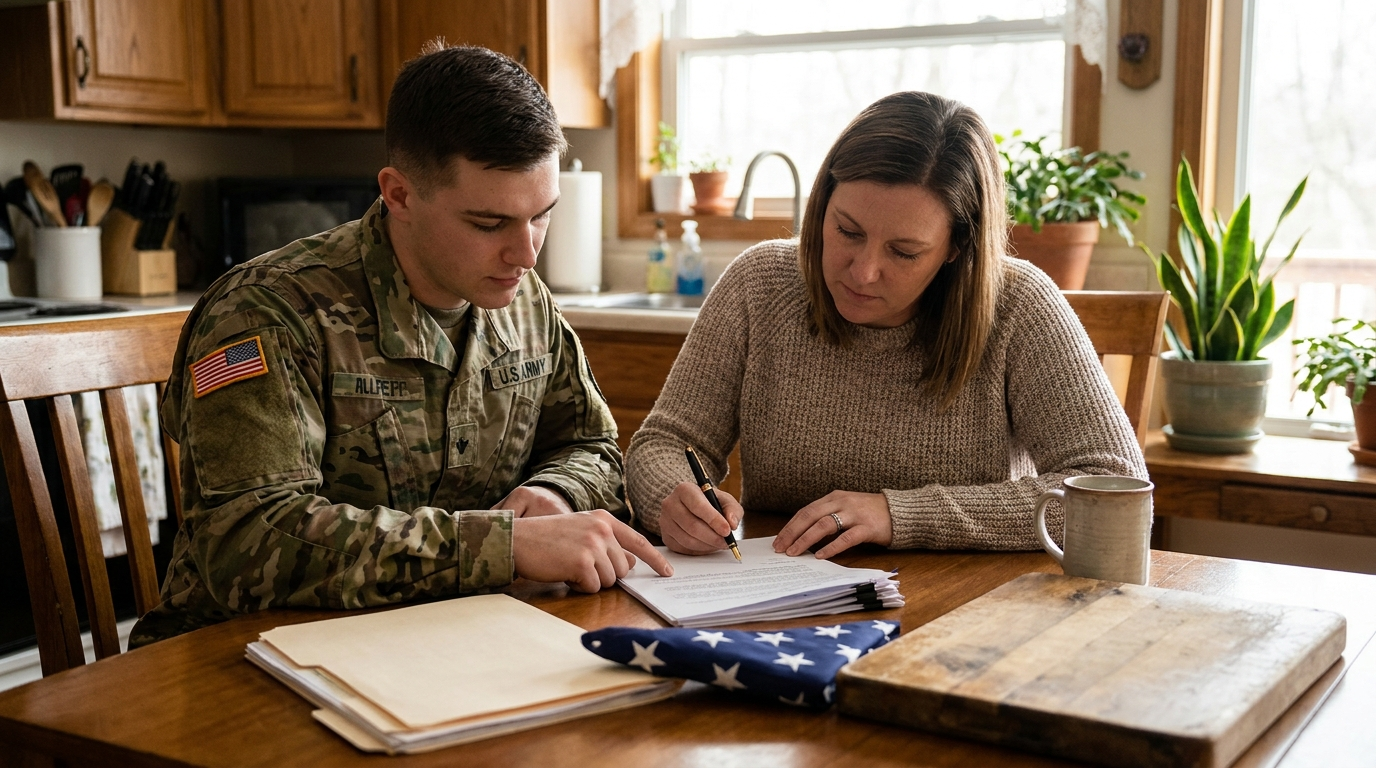
Military Power of Attorney: The Complete 2026 Deployment Guide
By the BaseNeed Team — military family resources, updated 2026
A military power of attorney is the single most important legal document most military families never think about — until the deployment orders drop. When a service member is downrange, someone back home still has to renew the car registration, sign the lease, cash the check, talk to TRICARE, and handle the hundred small emergencies that don't wait for a redeployment date. Without a valid power of attorney (POA), your spouse or trusted agent legally cannot do any of it on your behalf.
The good news: a military power of attorney is free, takes about 30 minutes at your installation legal office, and is backed by a federal law that forces banks, landlords, and state agencies in all 50 states to accept it. This guide walks you through every type of POA, when to use a general versus a special power of attorney, how to get one at no cost through JAG, and the complete pre-deployment legal checklist military families should finish before wheels-up.
> Affiliate disclosure: This article contains Amazon affiliate links. If you buy through them, BaseNeed may earn a small commission at no extra cost to you. It helps us keep resources like this free for the military community.
What Is a Military Power of Attorney and Why You Need One Before Deployment
A power of attorney is a legal document in which one person (the "principal" — the service member) authorizes another person (the "agent" or "attorney-in-fact" — usually a spouse, parent, or sibling) to act on their behalf in legal, financial, or personal matters.
A military power of attorney is a specific, more powerful version. Under 10 U.S.C. § 1044b, any power of attorney prepared and notarized by a military legal assistance attorney or military notary is exempt from state-specific form requirements. That means a POA drafted at the Fort Bragg legal office must be honored in Texas, California, or Germany — regardless of what format that state normally demands. No state seal, no local notary, no re-drafting when you PCS.
Why this matters before deployment:
Your spouse cannot sell or register a vehicle titled only in your name. Your bank will not discuss your account — even a joint issue — with someone who isn't on it. Your landlord cannot legally accept a lease termination signed by anyone but you. Your childcare provider may refuse authorization for emergency medical treatment from a non-parent. During a nine-month deployment with limited comms, every one of these becomes a real scenario. A POA solves all of them in advance.
The document is free at any military legal assistance office, and the appointment usually takes less than an hour. There is no reason to deploy without one.
General vs. Special Power of Attorney: Which One Should You Choose?
This is the decision that trips up most first-time deployers. Legal assistance attorneys almost always recommend the narrowest document that gets the job done — and here's why.
A general power of attorney gives your agent authority to do almost anything you could do yourself: open and close bank accounts, take out loans, sell property, file taxes, sign contracts. It is maximum convenience and maximum risk. If the relationship sours or the agent makes a mistake, the damage can be enormous, and many banks and title companies are wary of general POAs precisely because they're so broad.
A special power of attorney (also called a limited POA) authorizes only specific acts you list: "sell my 2019 Toyota Tacoma," "sign a residential lease at Fort Cavazos," "enroll my children in school and authorize medical care." Institutions accept them more readily because the authority is clear, and your exposure is capped.
The practical answer for most deploying service members: a package of two or three special POAs plus, only if truly needed, a general POA with a built-in expiration date that ends shortly after your expected return.
Military Power of Attorney Types Compared (2026)
| POA Type | What It Covers | Best For | Risk Level | Typical Duration |
|---|---|---|---|---|
| General POA | Nearly all legal/financial acts | Long deployments, fully trusted spouse | High | Deployment + 60 days |
| Special (Limited) POA | Only acts specifically listed | Car sale, lease, taxes, banking | Low | Until act is done or set date |
| Durable POA | Stays valid if you become incapacitated | Wounded/injured scenarios | Medium | Ongoing until revoked |
| Springing POA | Activates only upon an event (e.g., deployment or incapacity) | Those uneasy granting power now | Medium | Event-dependent |
| Medical POA (Healthcare) | Healthcare decisions on your behalf | All deployers, paired with living will | Medium | Until revoked |
| POA for Care of Children | School, medical, travel decisions for kids | Single parents, dual-military couples | Low | Deployment period |
One nuance worth knowing: a POA of any type becomes void the moment the principal dies. It is not a substitute for a will — which is why legal assistance offices prepare wills and POAs together in the same appointment.
How to Get a Military Power of Attorney for Free (Step by Step)
You do not need a civilian lawyer, and you should never pay for a POA as a service member. Here's the exact process in 2026:
- Locate your legal assistance office. Every branch runs free legal assistance for active duty, activated Guard/Reserve, and dependents. Use the Armed Forces Legal Assistance locator or call your installation directory. At most bases, POAs and notarizations are walk-in services.
- Decide what your agent actually needs to do. Sit down with your spouse or agent and list real tasks: vehicle registration renewal in March, lease renewal in June, filing the joint tax return, managing the USAA account. This list determines whether you need special POAs, a general POA, or both.
- Bring the right information. You'll need your ID card, and your agent's full legal name, address, and date of birth. For vehicle POAs bring the VIN and title info; for real estate, the property's legal description; for banking, account institution names.
- Have the documents drafted and notarized on the spot. The legal office prepares the POA under 10 U.S.C. § 1044b, and a military notary executes it — no state notary required, valid in every U.S. state and recognized at overseas installations.
- Ask for a will, living will, and medical POA in the same visit. Pre-deployment legal readiness is a package. If you have children or property and no will, this is the moment to fix it.
- Make certified copies and distribute them. Give the original to your agent, keep a copy in your deployment binder, and store a scan in a secure cloud folder you both can access. Some institutions insist on seeing an original, so ask the legal office for duplicate originals if your agent will deal with multiple agencies.
- Register POAs where they'll be used. Take the financial POA to your bank before you deploy and have it logged on the account. Banks are far more cooperative when the document is on file in advance rather than presented mid-crisis.
Total cost: $0. Total time: usually one afternoon.
What a Power of Attorney Can and Cannot Do
Even a general military POA has limits, and knowing them prevents ugly surprises mid-deployment.
A POA agent generally CAN: manage bank accounts and pay bills, sign leases and terminate them under SCRA rights, buy or sell vehicles, file and sign your tax return (with IRS Form 2848 or a POA meeting IRS standards), accept household goods shipments during a PCS, enroll children in school and DEERS-related services, and manage rental property.
A POA agent CANNOT: vote for you, sign your re-enlistment contract, get married or divorced on your behalf, make or change your will, transfer your Servicemembers' Group Life Insurance (SGLI) beneficiaries, or act after your death.
Also critical: private institutions can still refuse a general POA if their policy requires their own form. This is most common with banks and insurance companies. The fix is simple — ask your bank, USAA, Navy Federal, or insurer now whether they require an in-house POA form, and execute it before you leave. Ten minutes of prevention beats a three-week email chain from a FOB.
Special Powers of Attorney Every Military Family Should Consider
Rather than one all-powerful document, most legal assistance attorneys build deployers a tailored stack. The most commonly issued special POAs in 2026:
Vehicle POA. Allows your agent to register, insure, repair, ship, or sell a specific vehicle. If you're deploying from an overseas base like Ramstein, this is what lets your spouse handle USAREUR vehicle registration or sell the car before a follow-on PCS.
Real estate / housing POA. Signing or breaking a lease, accepting government housing, managing a rental you own, or even closing on a home purchase. If you're buying while deployed with a VA loan, lenders will require a specific POA naming the property — coordinate with the lender and legal office early. Our 2026 military home buying and VA loan guide covers how deployed buyers close remotely.
Financial/banking POA. Deposits, withdrawals, transfers, and communication with the bank. Pair it with allotments set up in myPay through DFAS so routine bills flow automatically and the POA only covers exceptions.
Tax POA. Deployment season overlaps tax season more often than not. A tax-specific POA (or IRS Form 2848) lets your spouse file the joint return without chasing your digital signature through spotty Wi-Fi.
POA for minor children. The one single parents and dual-military couples cannot skip — it gives the family care plan guardian authority for school enrollment, medical consent, and travel. It works alongside, not instead of, your official Family Care Plan.
Pre Deployment Checklist: Legal and Financial Documents
Use this pre deployment checklist in the 60 days before departure. Legal readiness is as much a part of deployment prep as packing lists and immunizations.
Legal (at the legal assistance office): will for you (and your spouse), medical POA and living will, general and/or special POAs as decided above, review of SCRA protections for leases, interest rates, and phone contracts.
Financial: update SGLI beneficiaries in milConnect, set up or verify allotments in myPay, enroll in the Savings Deposit Program eligibility awareness (10% guaranteed interest while deployed to designated areas), freeze or note credit, give your agent the bill calendar, and confirm your bank has the POA on file. Review the current pay tables in our 2026 military pay chart with BAH and BAS rates so your spouse knows exactly what should land each payday — and run your housing numbers with the BAH calculator.
Family & admin: Family Care Plan signed and filed (mandatory for single parents and dual-military), DEERS and ID cards current for all dependents (nothing expiring mid-deployment), vehicle registration and inspection dates checked against the deployment window, red-cross emergency contact info card for your spouse, and copies of orders — your family will need them for everything from TRICARE questions to military discounts.
Documents binder: originals or certified copies of POAs, marriage certificate, birth certificates, passports, insurance policies, deed/lease, and orders — all in one place your agent can physically reach.
> Popular pick: thousands of military families keep the deployment binder in a fireproof, water-resistant document bag — cheap insurance for irreplaceable paperwork. View on Amazon
Deployment Checklist for Spouses Staying Behind
The deployment checklist doesn't end when the bus leaves. For the spouse or agent at home, the first two weeks set the tone for the whole deployment:
Take the financial POA to the bank in person and confirm it's active on the account. Log into the family's bill dashboard and verify every autopay fired correctly on the first cycle. Save the legal assistance office number — POA questions from third parties can usually be resolved with one call. Locate your Family Readiness Group / key spouse contact and the installation's emergency after-hours legal line. Keep a simple log of every act performed under the POA (date, action, institution) — it protects both of you and makes post-deployment cleanup painless.
And build your own support structure: deployments are marathons. Many spouses use the season to start portable work — our guide to remote jobs for military spouses in 2026 is a good starting point — and stay connected downrange with regular mail; here are military care package ideas that actually get used.
> Popular pick: an expanding accordion file organizer keeps POAs, orders, and birth certificates sorted and grab-ready for every appointment. View on Amazon
Common Power of Attorney Mistakes Military Families Make
Signing a general POA "just to be safe." Broad authority you don't need is pure downside. If your agent only needs to renew a registration and file taxes, two special POAs are safer and more likely to be accepted.
No expiration date. Open-ended POAs float around for years and become a liability. Tie the end date to your expected return plus a 60–90 day buffer.
Not checking institution-specific requirements. The DMV in some states, the IRS, and many banks prefer or require their own forms. Ask every institution your agent will face before you deploy.
Forgetting the POA dies with you — and the will gap. A POA is useless for estate matters. If you have dependents and no will, fix both in the same legal office visit.
Leaving the agent uninformed. A POA without context is a loaded tool with no manual. Walk your agent through accounts, due dates, and points of contact. A one-page "if X happens, do Y" memo is worth more than the POA itself in a real emergency.
Waiting until the week of departure. Legal offices surge before major unit deployments. Book 45–60 days out, especially during PCS and deployment season when appointments are scarce.
When and How to Revoke a Power of Attorney
Circumstances change — separations, divorces, redeployments, or simply the end of the need. Revoking is straightforward but must be done actively:
Sign a written revocation of power of attorney (the legal assistance office drafts these free, too). Deliver a copy to your former agent and — just as important — to every institution that had the POA on file: banks, DMV, landlord, insurers. If the POA was recorded (common with real estate transactions), record the revocation with the same county office. Then destroy remaining originals. Until third parties receive notice, they can legally continue honoring the old document, so notification is the step that actually protects you.
If you built expiration dates into your POAs from the start, most of this housekeeping handles itself.
Key Takeaways
- A military power of attorney under 10 U.S.C. § 1044b is free at your installation legal office and must be accepted in all 50 states — no state notary needed.
- Choose special (limited) POAs over a general POA whenever possible; grant only the authority your agent actually needs, with an expiration date.
- Register financial POAs with your bank before deployment — institutions can insist on their own forms, and finding out downrange is too late.
- A POA is void at death and can't change your will or SGLI — do your will, medical POA, and beneficiary review in the same appointment.
- Start 45–60 days out: legal offices surge before deployments, and the full legal-financial-family checklist takes more than one afternoon.
Frequently Asked Questions
How much does a military power of attorney cost? Nothing. Military legal assistance offices prepare and notarize POAs free of charge for active duty members, activated Guard and Reserve, retirees, and dependents. Never pay a civilian service for a document JAG provides at no cost.
Does a military power of attorney work in every state? Yes. Under 10 U.S.C. § 1044b, a POA prepared by a military legal assistance attorney or notarized by a military notary is exempt from state form requirements and must be given the same effect in every U.S. state. Individual private institutions may still request their own internal forms, so verify with your bank in advance.
Can my spouse file our taxes with a power of attorney while I'm deployed? Yes. A special tax POA or IRS Form 2848 allows your spouse to sign and file a joint return. Deployed members in combat zones also receive automatic filing extensions, but filing on time via POA is usually simpler.
How long should a deployment power of attorney last? Best practice is your expected deployment length plus a 60–90 day buffer, with the expiration date written into the document. Avoid open-ended POAs — they create risk long after the need is gone.
What's the difference between a durable and a regular power of attorney? A regular POA becomes invalid if you're incapacitated; a durable POA stays in effect. For deploying service members, durability matters in worst-case injury scenarios, which is why many legal offices draft deployment POAs as durable by default. Pair it with a medical POA and living will.
What to Do Next
- List every task your family will need handled during deployment (vehicles, lease, banking, taxes, kids).
- Book a legal assistance appointment 45–60 days before departure — bring your agent's full legal details.
- Execute special POAs (plus will, medical POA, and living will) and get duplicate originals.
- Deliver the financial POA to your bank and confirm it's logged on your accounts.
- Build the deployment binder — POAs, orders, certificates — and brief your agent on the "if X, do Y" plan.
More From BaseNeed
- 2026 Military Pay Chart: Base Pay, BAH, BAS & Allowances
- Essential 2026 PCS Checklist: Digital Military Moving Guide
- Military Care Package Ideas: The Ultimate 2026 List
- Remote Jobs for Military Spouses: The 2026 Guide
- Ultimate 2026 Military Home Buying Guide: VA Loan Success Tips
- BAH Calculator · PCS Checklist
Sources and Resources
- Military OneSource — Powers of Attorney and Wills
- Armed Forces Legal Assistance — Find a Legal Office
- DFAS myPay — Allotments and Pay Management
- 10 U.S.C. § 1044b — Military Powers of Attorney
- VA.gov — Benefits and Records for Service Members
- Military OneSource — Family Care Plan Basics
---
BaseNeed is built by and for the US military community — practical guides, tools, and local knowledge for every duty station. This article is general information, not legal advice; for your specific situation, talk to your installation legal assistance office.
Read Full Article on BaseNeed →
Related Deployment guides
- → Family Separation Allowance (FSA): The Complete 2026 Guide to the New $300 Rate and How to Claim It — 13 min read read
- → Pre-Deployment Checklist: The Complete 2026 Military Readiness Guide — 13 min read read
- → How to Send a Military Care Package: The Complete 2026 APO/FPO Shipping Guide — 14 min read read
- → Deployment Packing List: The Complete 2026 Checklist for Every Branch — 16 min read read
- → Military Homecoming Ideas: Signs, Outfits, Countdown Traditions & the Complete 2026 Welcome Home Guide — 17 min read read
- → Deployment Gifts: The Ultimate 2026 Guide for Him, Her & Homecoming — 13 min read read